 Save
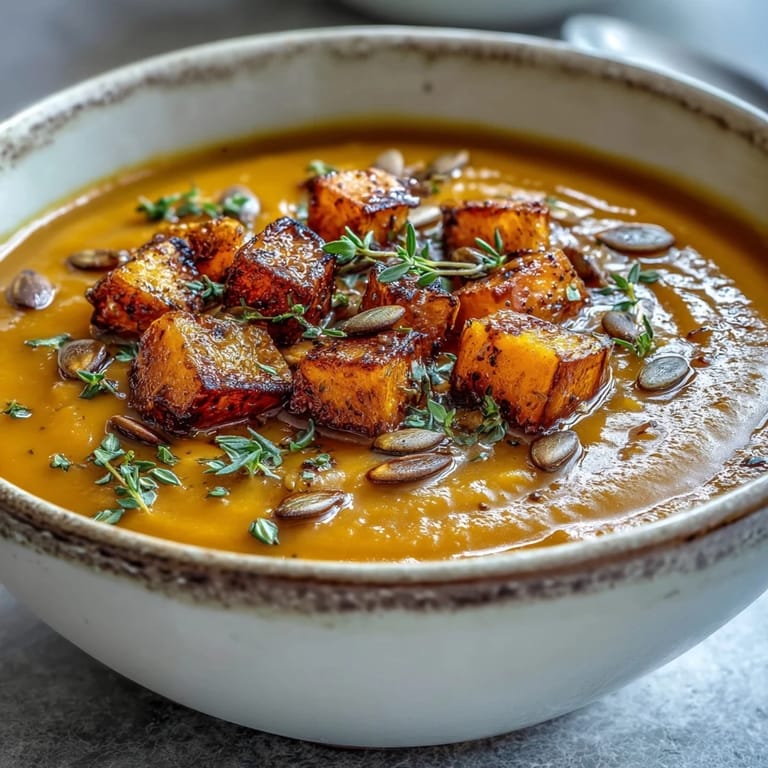
Save My kitchen smelled like caramelized autumn the afternoon I discovered how a simple butternut squash could transform into something silky and comforting. A friend had left half a squash on my counter with a note saying "do something magic with this," and I stood there wondering if she meant actual magic or just the cooking kind. That roasted golden color that emerged from the oven felt like a small victory, and when I blended it all together, the soup became this velvety canvas for warm spices and maple sweetness.
I made this soup for a dinner party on a chilly October evening, and watching people's faces light up with that first spoonful reminded me why I cook in the first place. Someone asked if there was brown sugar in it, surprised by how naturally sweet it tasted without being cloying. That's when I realized roasting really does change everything about a vegetable.
Ingredients
- 1 large butternut squash (about 1.2 kg / 2.5 lbs), peeled, seeded, and cubed: The star of the show, and roasting it first brings out a deeper, almost caramelized sweetness that raw squash can't match.
- 1 medium yellow onion, chopped: This builds a savory foundation that keeps the soup from tasting one-dimensional.
- 2 cloves garlic, minced: Just enough to add warmth without overpowering the delicate squash flavor.
- 1 liter (4 cups) vegetable broth: Use a good quality broth you'd actually drink, because it becomes the body of your soup.
- 250 ml (1 cup) water: This dilutes the broth slightly so the squash flavor shines through.
- 120 ml (1/2 cup) coconut milk or heavy cream: The finishing touch that makes it velvety; coconut milk keeps it vegan, cream makes it richer.
- 2 tbsp pure maple syrup: Real maple syrup matters here, and it echoes the squash's natural sweetness.
- 1/4 tsp ground nutmeg: A gentle spice that whispers in the background rather than shouts.
- 1/2 tsp ground cinnamon: The warming spice that ties everything together.
- 2 tbsp olive oil: For roasting and sautéing, keeping everything tasting clean and bright.
- Salt and freshly ground black pepper, to taste: Don't skip this seasoning step at the end; it's what makes the soup taste like itself.
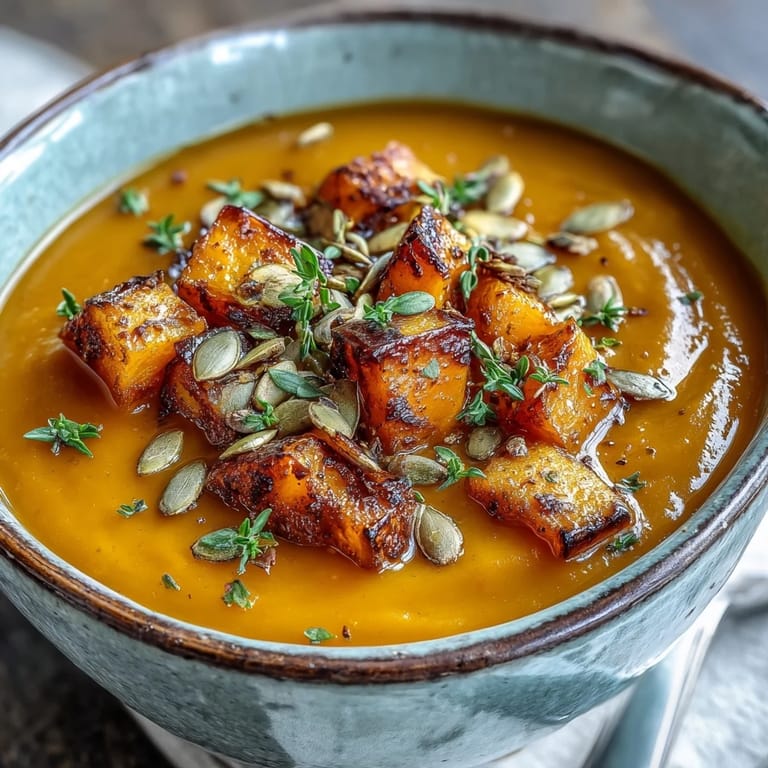
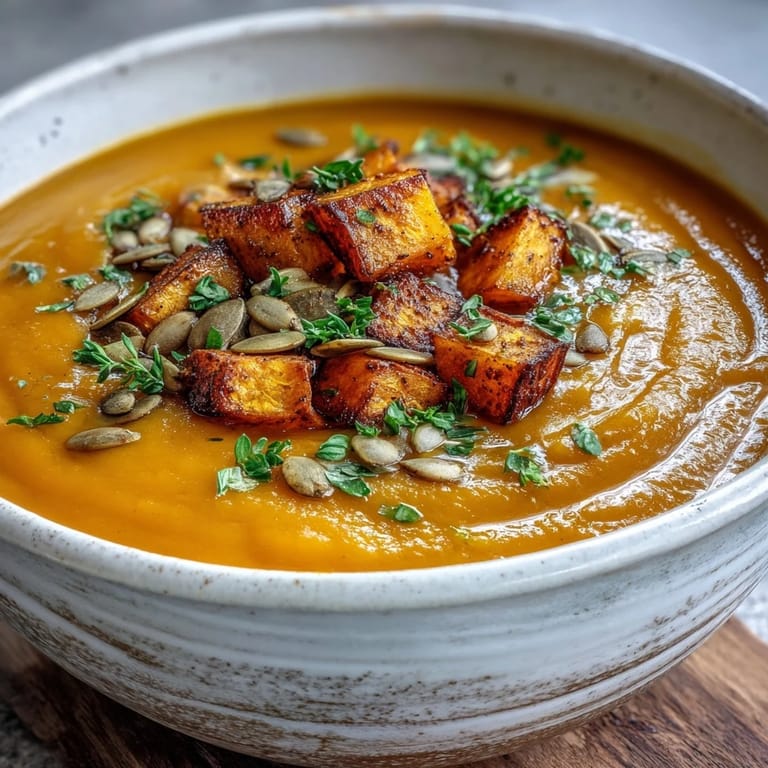
- Toasted pumpkin seeds, maple syrup drizzle, fresh thyme leaves (optional): These garnishes add texture and visual appeal, but they're not essential to the soup's soul.
Tired of Takeout? 🥡
Get 10 meals you can make faster than delivery arrives. Seriously.
One email. No spam. Unsubscribe anytime.
Instructions
- Get your oven ready:
- Preheat to 200°C (400°F) while you prep your squash. This head start means the oven is hot and ready when you need it.
- Roast the squash until it's golden and tender:
- Toss your cubed squash with 1 tablespoon olive oil, salt, and pepper on a baking sheet, then roast for 30 to 35 minutes, stirring halfway through. You'll know it's done when the edges are caramelized and a fork goes through easily.
- Build your flavor base:
- Heat 1 tablespoon olive oil in a large pot over medium heat, then add your chopped onion and let it soften for about 4 to 5 minutes until it's translucent and starting to smell sweet. Add the minced garlic and cook for just 1 minute more so it releases its aroma without burning.
- Bring everything together:
- Add your roasted squash, vegetable broth, water, maple syrup, nutmeg, and cinnamon to the pot. Stir it all together so the spices distribute evenly, then bring it to a boil and let it simmer for about 10 minutes so the flavors can mingle.
- Turn it silky smooth:
- Using an immersion blender, purée the soup until it's completely smooth, or carefully work in batches with a regular blender if that's what you have. The transformation from chunky to velvety happens in just a few minutes.
- Add the richness:
- Stir in your coconut milk or heavy cream, then taste and adjust salt and pepper as needed. Some pots need a pinch more salt, some need nothing at all, so trust your palate.
- Serve it warm:
- Ladle into bowls and top with whatever garnishes speak to you. A small handful of toasted pumpkin seeds adds crunch, a drizzle of maple syrup adds visual drama, and fresh thyme adds a little herbaceous note.
 Save
Save This soup became my comfort food during a stretch of gray November days when I needed something that felt like being wrapped in a warm blanket. It's the kind of dish that tastes fancy enough to serve to guests but simple enough that you can make it alone on a quiet afternoon, which somehow makes it even more special.
Why Roasting Makes All the Difference
The moment butternut squash hits a hot oven, something magical happens that you simply can't get from boiling it. The dry heat caramelizes the natural sugars, creating depth and complexity that make this soup taste like it's been simmering for hours when it hasn't. I learned this the hard way by trying the boiled version first, and it was so pale and thin by comparison that I immediately understood why roasting is worth the extra time.
The Spice Balance That Works
Too much cinnamon and nutmeg turn this into dessert soup, too little and it tastes like plain squash. The magic happens when the spices sit in the background, warming you from inside without announcing themselves loudly. I've learned to add the spices gradually and taste as I go, because every stove and every pot of broth behaves a little differently.
Cream Versus Coconut and Other Finishing Touches
Heavy cream makes the soup richer and more luxurious, with a silky mouthfeel that's almost indulgent. Coconut milk gives you something lighter and slightly tropical, perfect if you're cooking for vegans or if you prefer a less heavy soup. The choice is entirely yours, and either way it transforms the texture from thick to luscious.
- If you're making this for a crowd with mixed dietary needs, prepare it without cream and let people add their own at the table.
- A tiny pinch of cayenne pepper adds a subtle heat that makes people wonder what the secret ingredient is.
- Leftovers taste even better the next day, so don't hesitate to make extra.
 Save
Save This soup lives in that perfect place where comfort meets elegance, where a simple ingredient becomes something beautiful through patience and care. Serve it with crusty bread and watch how quickly the bowls empty.
Recipe Questions
- → Can I make this soup vegan?
Yes, simply use coconut milk instead of heavy cream. The soup will be creamy and dairy-free while maintaining its rich, velvety texture.
- → Why do I need to roast the butternut squash first?
Roasting caramelizes the natural sugars in the squash, intensifying its sweetness and adding depth of flavor that you won't achieve by simply boiling it.
- → Can I prepare this soup ahead of time?
Absolutely. This soup keeps well in the refrigerator for up to 4 days and actually tastes even better the next day as the flavors meld together. Reheat gently on the stovetop.
- → What can I serve with butternut squash soup?
Crusty bread, garlic bread, or a fresh green salad make excellent accompaniments. For a heartier meal, consider grilled cheese sandwiches or a quinoa salad on the side.
- → How can I adjust the sweetness level?
Start with less maple syrup and add more to taste after blending. You can also balance sweetness by adding a squeeze of fresh lemon juice or a pinch of cayenne pepper.
- → Can I freeze this soup?
Yes, this soup freezes beautifully for up to 3 months. Store in airtight containers, leaving some space for expansion. Thaw overnight in the refrigerator and reheat gently.