 Save
Save There's a particular quiet that settles in the kitchen on a cold evening when you commit to caramelizing onions. My neighbor stopped by unexpectedly one October, and rather than chat over coffee, we ended up in my kitchen watching three large onions transform from sharp and pale to something sweet and mahogany-dark. By the time the soup was bubbling under the broiler, cheese melting into golden pools, she understood why this dish has endured for centuries. It's not fancy or quick, but it feels like something worth the wait.
I made this soup the morning after my sister arrived for Thanksgiving, before anyone else woke up. The sound of onions sizzling in butter while the house was still dark felt like a small ritual, something I was doing just for her. When everyone gathered at the table hours later and tasted that first spoonful, the busy season ahead melted away for a moment. That's when I realized French onion soup isn't really about the ingredients at all.
Ingredients
- Large yellow onions, thinly sliced: These are your foundation, and the thin slicing matters because it exposes more surface area for caramelization to work its magic without burning.
- Unsalted butter and olive oil: The combination of both gives you the richness of butter without the risk of it burning alone; this is a lesson worth learning early.
- Garlic, minced: Just enough to whisper in the background, added after the onions are caramelized so it doesn't overpower or scorch.
- Sugar and salt: Sugar isn't for sweetness here; it actually triggers the Maillard reaction that deepens the onion's color and complexity, while salt draws out moisture to speed caramelization.
- All-purpose flour: This thickens the soup slightly and helps build body without making it heavy or starchy-tasting.
- Dry white wine: The acidity cuts through richness and picks up all those browned bits stuck to the bottom, which is where the real flavor lives.
- Beef or vegetable stock: Use good stock here because it's doing the heavy lifting; I learned this the hard way with a wan, watery batch once.
- Fresh thyme and bay leaf: These cook with the soup and are removed before serving, adding subtle herbaceous depth without any graininess.
- French baguette slices: Thick-cut, toasted, and sturdy enough to sit under that broiler without disintegrating into the soup.
- Gruyère cheese, grated: Its nutty, slightly sweet character doesn't overwhelm the delicate onion flavor, and it melts into glossy waves rather than stringy clumps.
Tired of Takeout? 🥡
Get 10 meals you can make faster than delivery arrives. Seriously.
One email. No spam. Unsubscribe anytime.
Instructions
- Heat your fat and add the onions:
- Warm the butter and olive oil together in a large pot over medium heat, then add your sliced onions all at once. Stir them so each piece gets coated in that golden mixture; the sound should be a gentle sizzle, not a violent hiss. If it's too loud, your heat is too high and you'll brown the onions instead of caramelize them, which are two very different things.
- Embrace the long, slow cook:
- Stir frequently for the next 35 to 40 minutes, and yes, it really does take that long. Around the halfway point, sprinkle in the sugar and salt, which will help deepen the color and draw out the onion's natural sweetness. By the end, your kitchen will smell almost sweet, and the onions should be a deep copper-bronze, soft enough to break apart with a spoon.
- Add garlic and build your base:
- Stir in the minced garlic and cook for just a minute until it perfumes the pot, then sprinkle the flour over everything and stir for another two minutes. This short window of cooking the flour prevents it from tasting raw in the finished soup.
- Deglaze with wine:
- Pour in the white wine slowly while scraping the bottom of the pot with a wooden spoon, releasing all those caramelized bits that look like they're stuck but are actually liquid gold flavor. Let it bubble for a minute or two so some of the alcohol cooks off.
- Build the broth:
- Pour in your stock, drop in the thyme sprigs and bay leaf, and bring everything to a gentle simmer. Reduce the heat and let it cook uncovered for 20 to 25 minutes, which allows the flavors to marry and intensify.
- Toast the bread and prepare for the finish:
- While the soup is simmering, preheat your broiler and arrange baguette slices on a baking sheet. Brush both sides lightly with olive oil and toast them under the broiler for about a minute per side until they're golden and crisp.
- Assemble and broil:
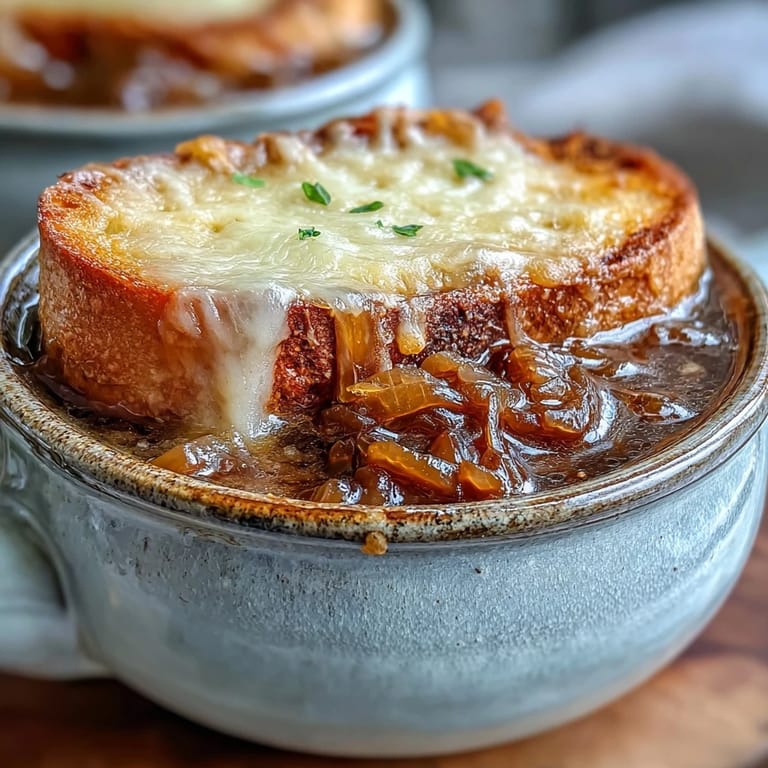
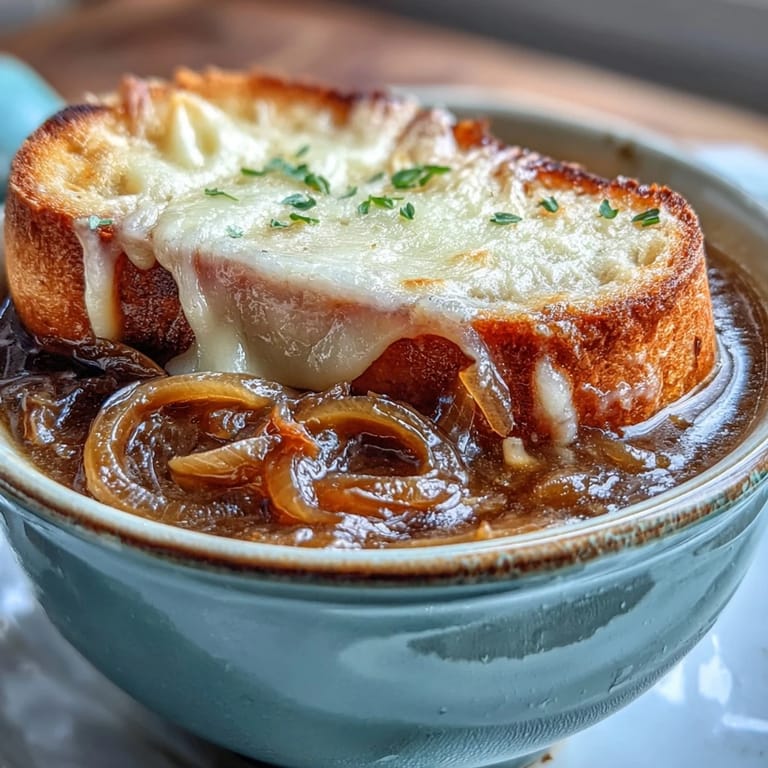
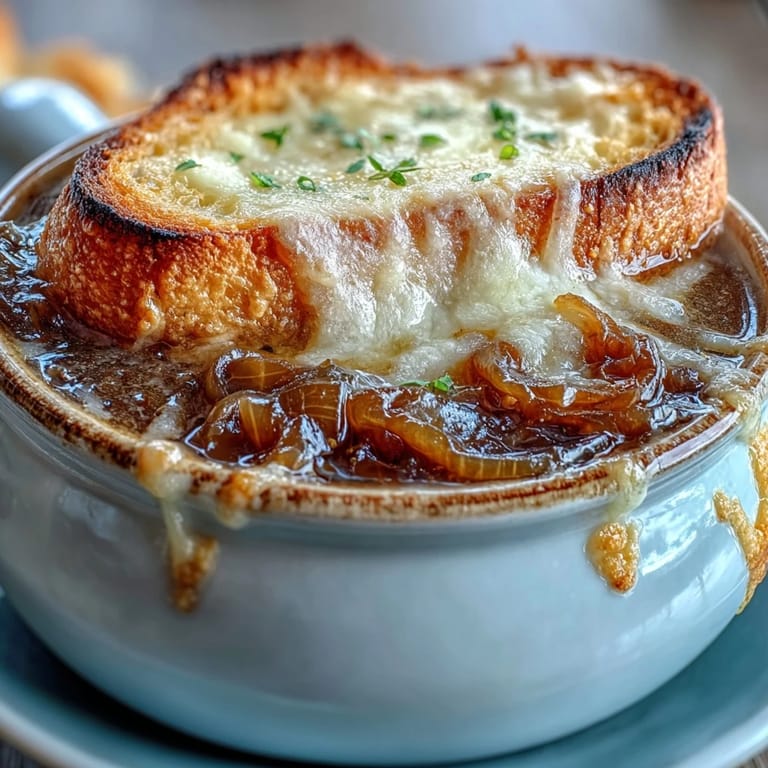
- Remove the thyme and bay leaf from the soup, taste it, and season with freshly ground pepper and a pinch more salt if needed. Ladle the hot soup into oven-safe bowls, top each with a toasted baguette slice, and pile the grated Gruyère generously on top. Place the bowls on a baking sheet and slide them under the broiler for 2 to 3 minutes, watching carefully as the cheese bubbles and turns golden.
 Save
Save 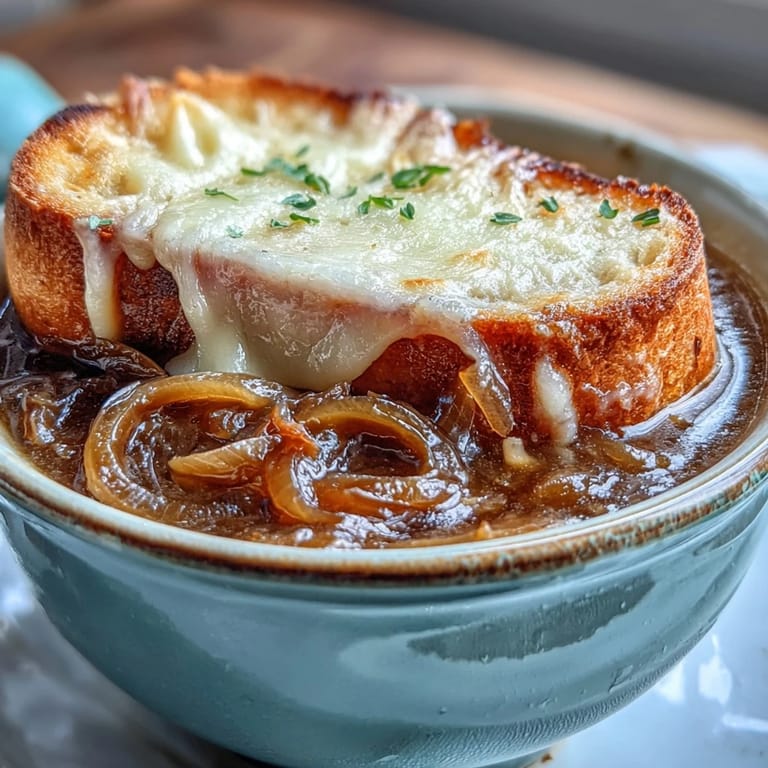 Save
Save My daughter once asked why this soup took so long, and I told her it was because good things can't be rushed. She tasted it that night and never asked again. Some dishes teach lessons beyond the kitchen, and French onion soup is one of them.
The Art of Caramelization
Caramelization isn't browning, and that distinction changed everything about how I approach this soup. When onions cook at a medium, consistent temperature, their natural sugars break down and recombine into hundreds of new compounds that taste rich, complex, and almost savory. The moment you turn up the heat to speed things up, you cross into burning territory, and there's no recovering from that.
Why Stock Matters More Than You Think
The first time I made this soup with a weak, underseasoned vegetable stock from a carton, I learned that all the caramelization in the world can't overcome a flat base. A good stock, whether beef or vegetable, should taste like something on its own, with body and depth. Now I taste my stock before I buy it, and I'm not shy about using homemade if I have it. The soup will only ever be as good as its foundation.
Building Flavor in Layers
This soup teaches you that flavor in cooking is almost always built in stages, never all at once. The onions caramelize first. The garlic adds its note. The flour creates body. The wine cuts through richness. The herbs whisper in the background. The cheese melts and adds umami at the end. Every step matters, and skipping any of them leaves a gap you'll notice.
- Toast your baguette slices right before serving so they stay crispy and don't absorb soup and turn soggy.
- If you don't have an oven-safe bowl, ladle the soup into a small cast iron skillet instead and broil that, which looks stunning at the table.
- Leftovers will thicken as they cool, but they reheat beautifully on the stovetop with a splash of water or stock to loosen them back up.
 Save
Save  Save
Save This soup proves that the best meals aren't always the most complicated ones. It's about patience, intention, and understanding that the simple ingredients deserve respect. Make it for someone you want to slow down with.
Recipe Questions
- → How long does it take to caramelize onions properly?
Caramelizing onions takes 35-40 minutes over medium heat with frequent stirring. Adding sugar and salt halfway through helps develop deep, sweet flavor and rich golden color. Don't rush this step as it creates the soup's signature taste.
- → Can I use a different type of cheese instead of Gruyère?
Yes, Emmental or Comté make excellent substitutes for Gruyère. Both melt beautifully and offer similar nutty, savory flavors. Swiss cheese also works in a pinch, though the flavor will be milder.
- → What type of stock works best for this soup?
Beef stock provides the richest, most traditional flavor. For vegetarian versions, use quality vegetable stock. A combination of beef and chicken stock creates excellent depth. Homemade stock elevates the final result significantly.
- → Do I need special bowls to make this?
Yes, you'll need oven-safe bowls that can withstand broiler temperatures. Traditional French onion soup crocks work perfectly, but any ceramic or stoneware bowls labeled oven-safe will do. Avoid regular glass or plastic bowls.
- → Can I make this soup ahead of time?
The soup base can be made 2-3 days ahead and refrigerated. When ready to serve, reheat the soup, prepare fresh toasted bread, and add cheese before broiling. This actually allows flavors to develop further.
- → What wine pairs well with French onion soup?
A crisp white wine like Chardonnay or Sauvignon Blanc complements the rich flavors beautifully. Light reds such as Pinot Noir or Beaujolais also work well. The same dry white wine used in cooking makes an excellent pairing.