 Save
Save There's something about the sizzle of butter hitting a hot skillet that instantly puts me in a good mood. I learned to make omelets during a lazy Sunday brunch with my roommate, who kept insisting that "anyone can flip an egg." Turns out, she was mostly right, though my first attempt looked more like scrambled eggs folded in half. But that melted cheese, the way it pooled into warm pockets—that's when I understood why the French treat this simple dish with such reverence.
I made this for someone I was trying to impress once, and I was so nervous about timing that I nearly burned the butter. But somehow, it still turned out golden and fluffy, and they asked for seconds. That's when I realized an omelet isn't about perfection—it's about the care you put into those five minutes at the stove.
Ingredients
- Eggs: Four large ones give you enough volume for a properly fluffy omelet; don't skimp here because they're the whole foundation.
- Milk or cream: Just two tablespoons makes a difference in texture, creating those tiny air pockets that make it tender.
- Unsalted butter: One tablespoon gets the skillet singing without overpowering the delicate egg flavor.
- Grated cheese: About 80 grams (Gruyère is my go-to, but Cheddar or Emmental work beautifully too) distributed evenly so every bite has that melted richness.
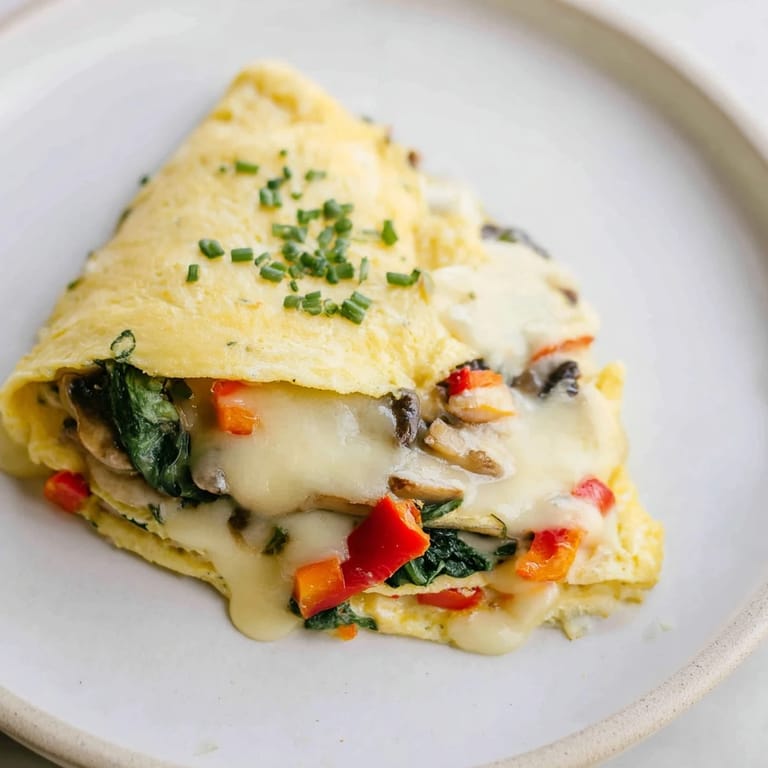
- Optional fillings: Ham, bell pepper, spinach, or mushrooms—pick what speaks to you, or combine a few for depth.
- Salt and black pepper: Season generously because eggs are forgiving and actually need it.
- Fresh herbs: Chives or parsley scattered on top just before serving add a bright moment of freshness.
Tired of Takeout? 🥡
Get 10 meals you can make faster than delivery arrives. Seriously.
One email. No spam. Unsubscribe anytime.
Instructions
- Whisk your eggs into a light cloud:
- Crack all four eggs into a bowl, pour in the milk or cream, and season with salt and pepper. Whisk for about a minute until it's noticeably paler and slightly foamy—this is the secret to fluffiness, so don't rush it.
- Heat the butter slowly:
- Place your skillet over medium heat and add the butter, watching it melt into a golden puddle that smells toasty but never brown. That moment when it stops foaming is your signal to go.
- Pour and let it breathe:
- Tilt the skillet as you pour the egg mixture so it spreads evenly, then leave it completely alone for about a minute. Resist the urge to stir; you're building structure.
- Add the cheese and fillings:
- Sprinkle the grated cheese across the top, then scatter your chosen fillings—ham, peppers, spinach, whatever you've picked. The heat will start melting everything together.
- Coax the edges with a gentle lift:
- Using a spatula, gently lift the cooked edges and tilt the skillet so uncooked egg slides underneath. Do this a couple of times over the next minute or two, being tender so the omelet doesn't tear.
- Fold and finish:
- When the top is still slightly creamy but the bottom is set, fold it in half with your spatula and cook for just 30 seconds more. Slide it onto a plate immediately, garnish with fresh herbs if you have them, and serve while it's still warm.
 Save
Save My favorite memory isn't from some fancy brunch spot but from a Tuesday morning when I made this for my sister before she moved away. We sat at the kitchen counter, and she said it tasted like what home should taste like. I've been chasing that feeling ever since.
Choosing Your Cheese Wisely
Not all cheese melts the same way, and this matters more than you'd think. Gruyère is my personal favorite because it melts silky and adds a subtle nutty depth that elevates the whole dish without shouting about it. Cheddar will give you a sharper, more pronounced flavor and a slightly firmer melt. Emmental is creamy and almost understated. I once used a block of old, hard Parmesan thinking it would work, and while it didn't ruin anything, it seized up and turned grainy—a learning moment. The golden rule: choose cheese that melts smoothly, not one that gets stringy or tough.
The Art of Not Overthinking It
The biggest trap people fall into is fussing too much with the omelet while it cooks. Every time you poke it or move it around, you're breaking down the structure you're trying to build. I learned this by doing it wrong repeatedly until someone patient watched me and said, "Just let it cook." Medium heat, patience, and gentle touches at the right moments—that's the whole secret. Medium heat matters because high heat will scramble the bottom before the top sets, and you'll end up with something brown and overcooked instead of tender.
Making It Your Own
An omelet is a blank canvas, and that's part of its beauty. Some days I make it perfectly plain with just cheese and herbs because I'm craving simplicity. Other times I'll sauté mushrooms and spinach first, add a bit of diced ham, and feel like I've created something special. The technique stays exactly the same, but the experience changes completely. Experiment with what you have, trust that almost anything tastes better wrapped in eggs and cheese, and remember that even imperfect omelets make for good eating.
- Prep your fillings and grate your cheese before you start cooking—you won't have time to do it once the eggs hit the skillet.
- If you're feeding more than two people, make individual omelets rather than trying to scale this up into one massive one.
- Serve immediately with crusty bread or a light salad to round out the meal.
 Save
Save This omelet has fed me on mornings when I needed something quick and reassuring, and it never disappoints. Make it once and you'll have this in your permanent rotation.
Recipe Questions
- → How do I make the omelet fluffy?
Beating the eggs vigorously with milk or cream incorporates air, making the texture light and fluffy.
- → Can I add vegetables to this dish?
Yes, diced bell peppers, spinach, and mushrooms complement the cheese and enrich the flavors wonderfully.
- → What cheeses work best here?
Gruyère, Cheddar, and Emmental melt well and provide a creamy, rich taste to the eggs.
- → How should I cook the eggs to avoid browning?
Use medium heat and melt butter gently until bubbling but not browned before pouring in the eggs to keep them tender.
- → Is this suitable for vegetarians?
Yes, simply omit the diced ham and the dish remains vegetarian-friendly without compromising flavor.