 Save
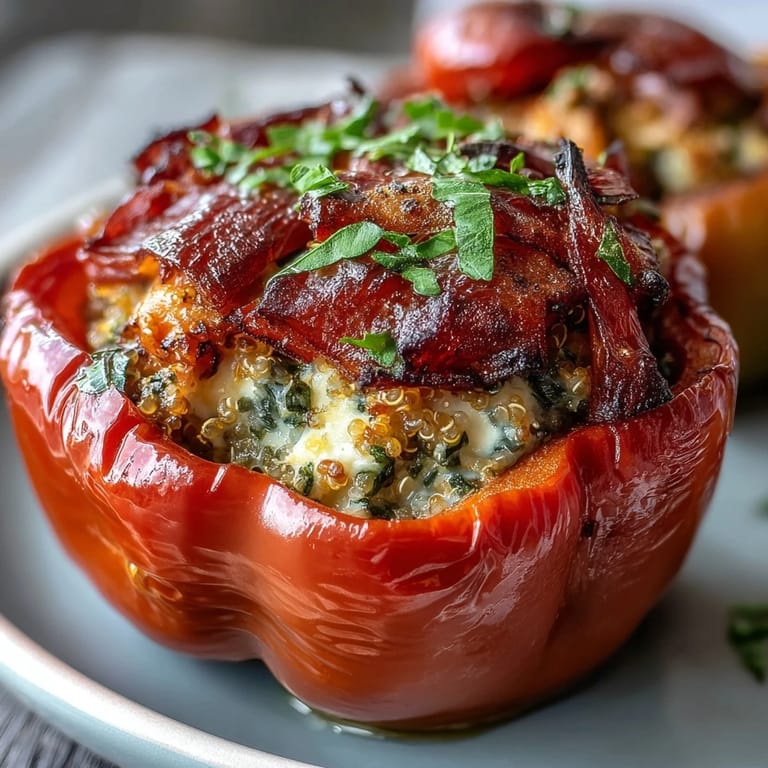
Save There's something about the smell of roasted bell peppers that instantly transforms a kitchen into something warmer, more inviting. My friend Sarah brought over a version of these one autumn evening, and I watched how her hands moved through the preparation with such ease—dicing, chopping, combining—like she'd done it a hundred times before. That night, I realized stuffed peppers weren't just dinner; they were a canvas for whatever herbs and vegetables you loved most. Spring came around, and I decided to fill mine with quinoa and fresh herbs, turning a simple idea into something that felt both nourishing and celebratory.
I made these for my book club on the first warm evening of May, serving them alongside a crisp white wine and a simple salad. One of my friends, who'd been eating the same rotation of meals for months, took a second helping and actually paused mid-bite, commenting on how the herbs tasted so alive and bright. It's those small moments—when food connects people and reminds them what they've been missing—that make cooking feel like something worth doing.
Ingredients
- Bell peppers (4 large, any color): Look for peppers that stand relatively flat on the bottom so they won't tip over during baking; red and yellow ones tend to be sweeter than green.
- Quinoa (1 cup, rinsed): Rinsing removes the bitter coating and prevents a gritty texture that many people complain about when they say they don't like quinoa.
- Vegetable broth (2 cups): The quality matters here since it's the main seasoning for the grain; use a low-sodium version if you prefer to control the salt level yourself.
- Zucchini (1 small, finely diced): Small zucchini are less watery and more flavorful than large ones, which makes a noticeable difference in the filling.
- Red onion and garlic (1 small onion, 2 cloves): These aromatics form the flavor foundation, and sautéing them together for just two minutes brings out sweetness without bitterness.
- Cherry tomatoes (1 cup, quartered): Their natural sweetness and acidity balance the earthiness of the quinoa beautifully.
- Fresh herbs (parsley, basil, mint): These are what make the dish taste alive; if you can't find fresh mint, skip it rather than using dried, as the flavor becomes muted and strange.
- Feta cheese (1/2 cup, optional): The crumbles add a salty, tangy note that brightens everything, but the dish stands perfectly well without it for vegan dinners.
- Olive oil (2 tbsp) and seasonings: Good olive oil matters for the final taste, and the oregano acts as a gentle Mediterranean anchor without overpowering the fresh herbs.
Tired of Takeout? 🥡
Get 10 meals you can make faster than delivery arrives. Seriously.
One email. No spam. Unsubscribe anytime.
Instructions
- Heat your oven and prepare the stage:
- Set the oven to 375°F and lightly grease your baking dish—this small step prevents sticking and makes cleanup surprisingly easier than you'd expect.
- Cook the quinoa until fluffy:
- Bring the vegetable broth to a rolling boil, stir in the rinsed quinoa, then lower the heat and let it simmer covered for 15 minutes; you'll know it's done when the liquid is absorbed and the grains look slightly translucent with a little tail peeking out. Fluff it gently with a fork and set it aside to cool slightly while you move on to the vegetables.
- Build flavor in the skillet:
- Pour olive oil into a large skillet over medium heat, then add the chopped red onion and minced garlic, letting them sizzle and soften for about 2 minutes until the smell makes you pause and take a breath. Add the diced zucchini and cook for another 4 minutes until it softens, then stir in the cherry tomatoes and cook for 2 more minutes, allowing everything to become tender and friendly with one another.
- Marry the components together:
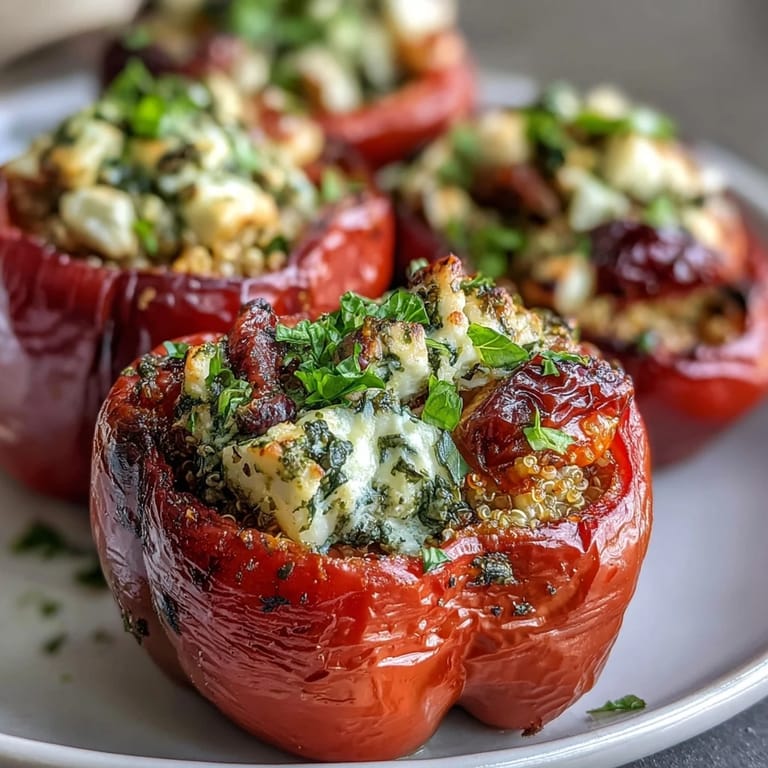
- In a large bowl, combine the cooled quinoa with all the sautéed vegetables, then gently fold in the fresh parsley, basil, mint, oregano, salt, pepper, and feta cheese if you're using it; the filling should smell herbaceous and feel slightly moist but not wet.
- Fill the peppers with intention:
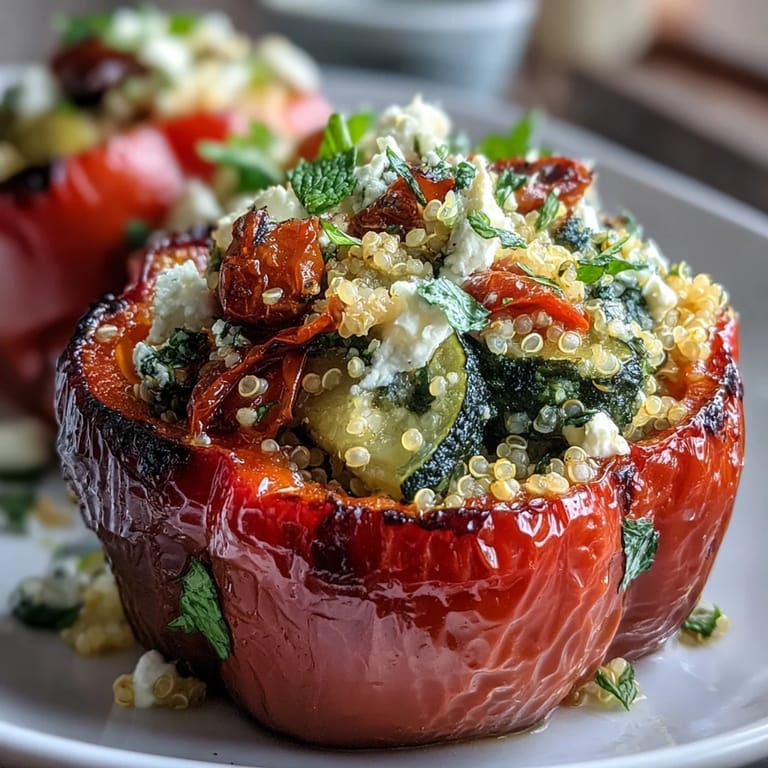
- Spoon the quinoa mixture into each pepper cavity, packing it lightly so nothing compacts—these peppers are meant to hold their shape and cook evenly. Arrange them upright in your greased baking dish, standing shoulder to shoulder like they're ready for their transformation.
- Bake until tender and slightly caramelized:
- Cover the dish with foil and bake for 30 minutes, then remove the foil and bake another 10 minutes until the peppers become tender enough that a fork slides through easily and the tops develop a light golden-brown color. You're looking for that sweet spot where they're soft but not collapsed, still holding their shape with a little visual char on top.
- Rest and finish:
- Remove from the oven and let the peppers cool for 5 minutes before serving, which allows them to set slightly and makes plating less stressful; finish with a scattering of fresh herbs if you have them to spare.
 Save
Save What surprised me most was how this dish brought out genuine conversation at the table—people lingered over plates, asked for the recipe, and actually took home leftovers in containers, which felt like the highest compliment possible. Food that nourishes and satisfies while also making people feel cared for is worth mastering.
Making Substitutions Without Losing Magic
The beauty of this recipe is that it welcomes improvisation without falling apart. If you can't find fresh mint, simply leave it out and add an extra tablespoon of basil instead—the dish will taste different but equally wonderful. Zucchini can be swapped for diced eggplant or mushrooms, both of which release their own moisture and develop a lovely tender texture in the filling.
Storing, Reheating, and Extending Your Batch
These peppers actually improve slightly after a day in the refrigerator, as the flavors settle and meld together—they'll keep beautifully for up to three days in an airtight container. Reheating is gentle; simply cover with foil and warm in a 350°F oven for about 15 minutes until heated through, or you can eat them cold straight from the fridge on busy days when sitting down feels like a luxury. I've also frozen the filling on its own for up to two months, stuffing fresh peppers whenever the mood strikes and I need dinner with minimal effort.
Variations That Feel Like New Recipes
Once you understand the basic structure, these peppers become a playground for your pantry and garden. Try adding chopped kalamata olives or sun-dried tomatoes for briny depth, or fold in toasted pine nuts for a subtle crunch that catches you by surprise with each bite. For a heartier version, mix in cooked lentils alongside the quinoa, and if you want to go completely different, try a Spanish-inspired filling with saffron-infused quinoa, roasted chickpeas, and smoked paprika instead of the Mediterranean herbs.
- Crumbled goat cheese works beautifully if you prefer a tangier dairy option than feta.
- A drizzle of good balsamic reduction over the finished peppers adds a sweet-tart note that elevates everything.
- Serve alongside tzatziki sauce for dipping if you want an extra layer of creaminess and cool contrast.
 Save
Save These stuffed peppers have become my go-to recipe when I want to feel both practical and proud of what lands on the table. There's something grounding about filling peppers with your own hands, watching them transform in the oven, and serving something that tastes like you actually cared.
Recipe Questions
- → How do I soften the bell peppers before baking?
Simply cut off the tops and remove seeds. Baking them filled will soften the peppers as they cook in the oven.
- → Can quinoa be cooked in vegetable broth instead of water?
Yes, cooking quinoa in vegetable broth enhances its flavor and complements the herbs and vegetables.
- → What herbs work best with this dish?
Fresh parsley, basil, and mint provide bright, aromatic flavors that balance the heartiness of quinoa and peppers.
- → Is it possible to prepare this dish vegan?
Omit the optional feta cheese or substitute with a plant-based alternative to keep the dish vegan.
- → How can I add more flavor to the filling?
Adding chopped olives or sun-dried tomatoes boosts the savory profile and adds depth to the filling.