 Save
Save My first poke bowl came together almost by accident on a Tuesday evening when I had perfectly fresh salmon, some leftover sushi rice, and a sudden craving for something that felt both indulgent and light. I'd been drawn to poke for years, watching friends order these beautiful, colorful bowls at restaurants, but something about assembling one at home felt intimidating until that night when I realized it was really just about treating each ingredient with respect and letting them shine side by side.
I made this for friends during a casual summer gathering, and I'll never forget watching their faces light up when they saw the bowl assembled before them—all those vibrant colors and textures somehow made something as simple as rice and fish feel like a celebration. That's when I understood that poke isn't just food; it's edible optimism on a plate.
Ingredients
- Sushi-grade salmon or tuna (400 g, diced): The quality of your fish makes all the difference here; ask your fishmonger for sushi-grade and trust their recommendation on whether to use salmon or tuna based on what arrived fresh that day.
- Soy sauce, sesame oil, rice vinegar, honey, fresh ginger, sesame seeds: These build the marinade that transforms plain fish into something deeply savory and slightly sweet, so don't skip the ginger—it adds brightness that rounds everything out.
- Sushi rice or short-grain rice (320 g): Short-grain rice holds the vinegar dressing better and creates that slightly sticky, cohesive base that makes the bowl feel complete.
- Water (480 ml): Use filtered water if your tap water is heavily chlorinated, as it genuinely affects the rice's final taste.
- Rice vinegar, sugar, salt for rice seasoning: This trio turns plain rice into subtly tangy, slightly sweet rice that complements the marinated fish without competing with it.
- Avocado (1 ripe): Choose one that yields slightly to thumb pressure but isn't mushy; slice it just before assembly so it stays creamy and fresh-tasting.
- Cucumber, carrots, radishes, spring onions: These vegetables add crunch and freshness that keeps the bowl from feeling heavy, and their mild flavors let the fish take center stage.
- Edamame beans (100 g, shelled): Buy them pre-cooked and frozen if you can; they add protein, a pop of color, and a slightly sweet, buttery flavor.
- Nori sheets, toasted sesame seeds, microgreens: These finishing touches add visual drama and textural contrast—nori brings umami, sesame seeds add a nutty crunch, and microgreens taste like spring in your mouth.
- Spicy mayo (4 tbsp mayo mixed with sriracha): Make this fresh right before serving so the sriracha stays bright and doesn't fade into the mayo.
- Pickled ginger and lime wedges (optional but encouraged): Pickled ginger cuts through the richness and resets your palate between bites, while lime adds a final squeeze of brightness.
Tired of Takeout? 🥡
Get 10 meals you can make faster than delivery arrives. Seriously.
One email. No spam. Unsubscribe anytime.
Instructions
- Rinse and cook the rice thoughtfully:
- Rinse your rice under cold running water, stirring gently with your fingers, until the water runs nearly clear—this removes excess starch so the rice stays separate instead of gluey. Combine with fresh water in a saucepan, bring to a boil uncovered, then cover and drop the heat to low for exactly 15 minutes; you'll hear the bubbling soften as the rice absorbs the water. When the time is up, remove from heat and let it sit, lid on, for 10 minutes so the grains finish hydrating and become tender.
- Season the rice while it's warm:
- While the rice is still steaming gently, stir in rice vinegar, sugar, and salt, using a cutting motion with your spoon to gently coat each grain without crushing it. This is the moment the rice transforms from plain to special—you want that slight tang and sweetness throughout. Let it cool to room temperature, as warm rice will turn your toppings into mush.
- Build your marinade and rest the fish:
- In a separate bowl, whisk together soy sauce, sesame oil, rice vinegar, honey, grated ginger, and sesame seeds until the honey dissolves and everything feels balanced in color and aroma. Add your diced fish and toss gently—you're coating, not bruising—then slide it into the refrigerator for 10 to 15 minutes, which lets the flavors seep in without turning the fish mushy or overly salty.
- Slice and prepare your vegetables:
- While the fish marinates, set up your cutting station and work through your vegetables: halve and pit the avocado, then slice it lengthwise; slice cucumber into thin half-moons; julienne carrots into thin matchsticks; slice radishes paper-thin on a mandoline if you have one; and slice spring onions on the bias for elegance. If your edamame aren't already cooked, drop them into boiling salted water for 4 minutes, then drain and cool them slightly.
- Assemble with intention:
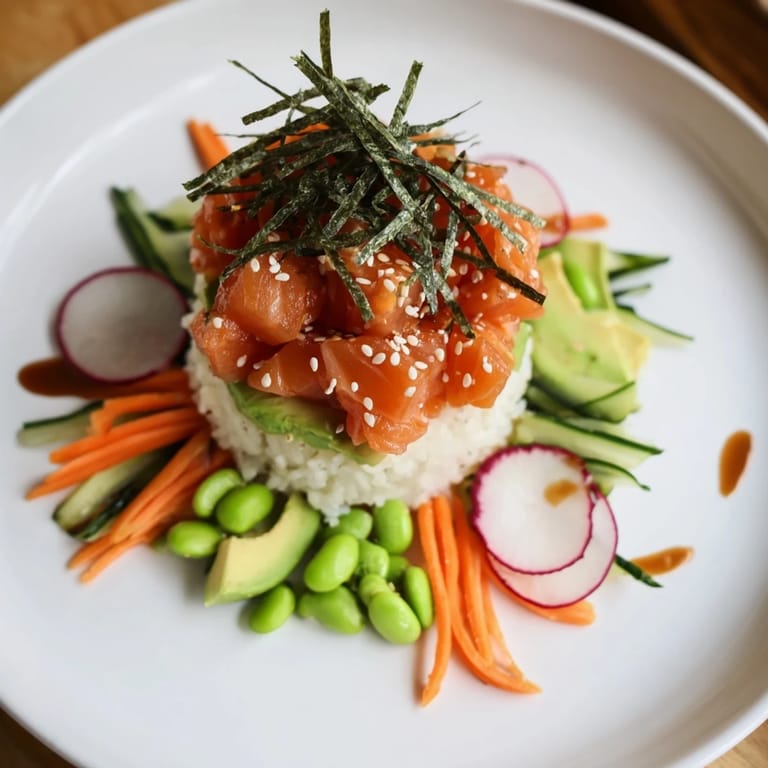
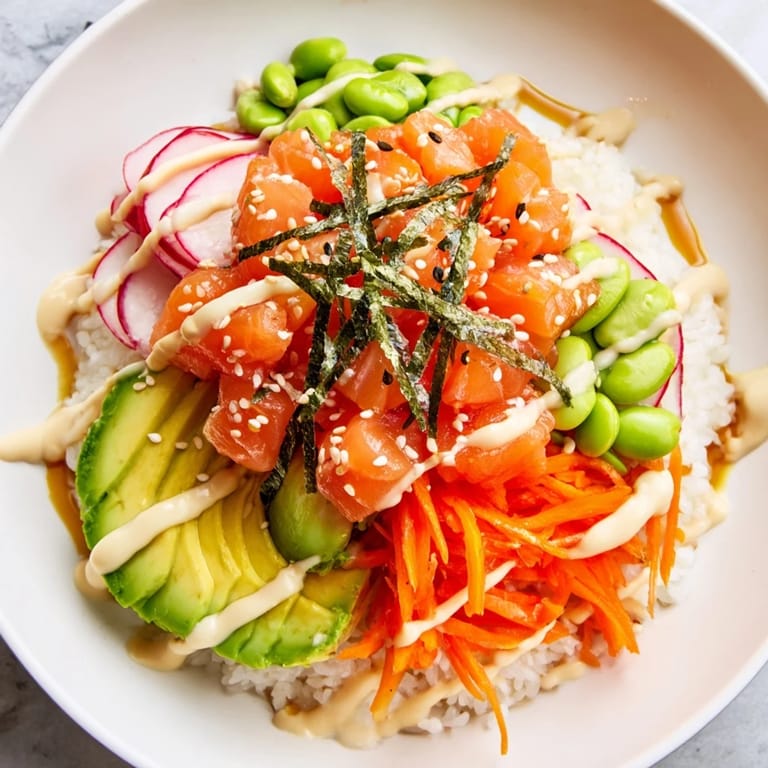
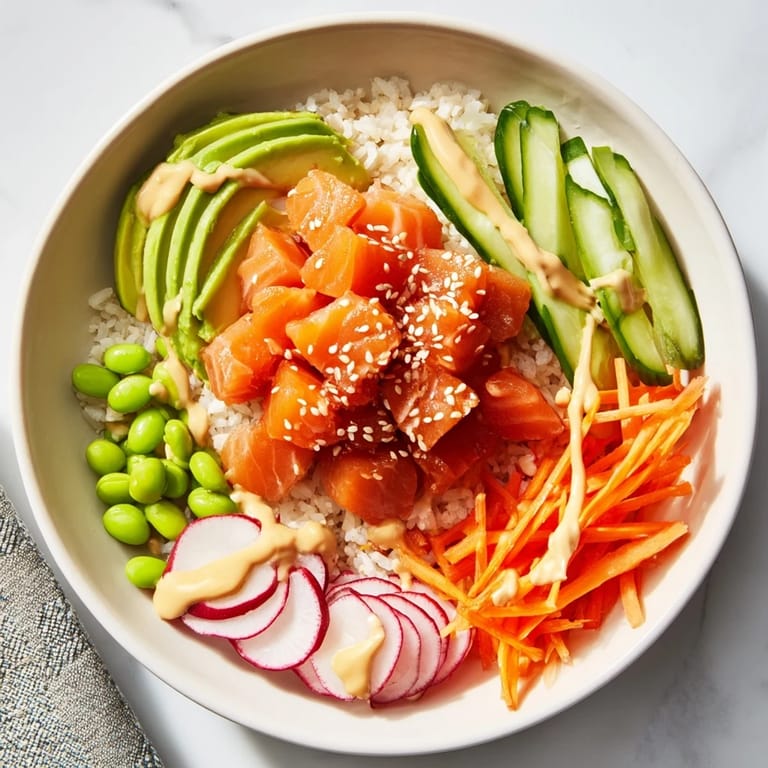
- Divide your cooled rice among four bowls, pressing it gently into an even layer—this creates a canvas for your toppings. Arrange the marinated fish in a cluster at the top, then create little sections around it with avocado, cucumber, carrots, edamame, and radishes, so each spoonful can catch multiple textures and flavors. Scatter nori strips, toasted sesame seeds, and microgreens across the top like you're adding final brushstrokes to a painting.
- Finish and serve:
- Drizzle spicy mayo in a thin zigzag across the bowl and a little extra soy sauce for depth, then place pickled ginger on the side and a lime wedge nearby. The beauty of this step is that you can adjust flavors to taste—some people love more mayo, others prefer the pure fish-and-soy approach, so let people customize as they eat.
 Save
Save There's a moment when you bite into a properly assembled poke bowl where the cold fish, creamy avocado, crunchy vegetables, and tangy rice all meet at once, and everything just works in harmony. That's when poke became something I made again and again, not because it's trendy, but because it genuinely makes me feel both nourished and happy.
The Art of Balancing Your Flavors
Poke is fundamentally about balance—the richness of fish and avocado needs brightness from ginger, lime, and pickled elements to feel complete. When I first made this, I skipped the pickled ginger because I thought it was just a garnish, and the bowl felt flat and heavy by the end. Once I added it back, I understood that each element has a job, and the seemingly small components are what elevate it from adequate to genuinely delicious. Pay attention to the interplay between umami from soy and nori, sweetness from honey in the marinade, heat from sriracha mayo, and freshness from ginger and lime—when all four are present, something magical happens.
Making It Your Own
The skeleton of this recipe is flexible enough to accommodate whatever you have and love. I've made vegetarian versions with marinated tofu that absorbed the soy-ginger marinade beautifully, switched salmon for ahi tuna when that's what looked better at the market, and added mango in summer or roasted sweet potato in autumn. The only rule I follow is respecting the rice as your foundation and keeping that fresh, crunchy element with your vegetables—those two things keep it from becoming heavy or one-note. Experiment, taste as you go, and trust your instincts about what flavors speak to you.
Bringing It All Together
This recipe reminds me that some of the best meals don't require complicated techniques or hours of labor—they just need good ingredients treated with respect and a willingness to let each one shine. The ritual of assembling the bowl, arranging colors and textures, and knowing that in moments you'll eat something vibrant and nourishing, is itself part of the joy.
- Taste the marinade before adding the fish to make sure it's balanced between salty, sweet, and tangy.
- Keep everything cold right up until you eat it—temperature contrast is part of what makes poke so refreshing.
- Don't feel locked into these exact vegetables; use what's seasonal and what you genuinely love eating.
 Save
Save A poke bowl is an invitation to slow down and enjoy something that tastes like care on a plate. Make it for yourself on an ordinary Wednesday, or make it for people you want to impress—either way, you'll understand why this dish keeps coming back into my kitchen.
Recipe Questions
- → What type of fish is best for this bowl?
Sushi-grade salmon or tuna works best due to its freshness and texture, ensuring a safe and flavorful experience.
- → How is the rice prepared for the bowl?
The rice is rinsed, cooked until tender, then seasoned with rice vinegar, sugar, and salt to give a slightly tangy, balanced flavor.
- → Can the bowl be made vegan or vegetarian?
Yes, by substituting the fish with marinated tofu or tempeh, and maintaining the fresh vegetable toppings.
- → What toppings enhance the flavor and texture?
Sliced avocado, radishes, edamame, spring onions, and nori strips add freshness, crunch, and umami layers to the bowl.
- → How can the sauces be customized?
The spicy mayo can be adjusted in heat by varying sriracha amounts, and additional soy sauce or pickled ginger can be added to taste.