 Save
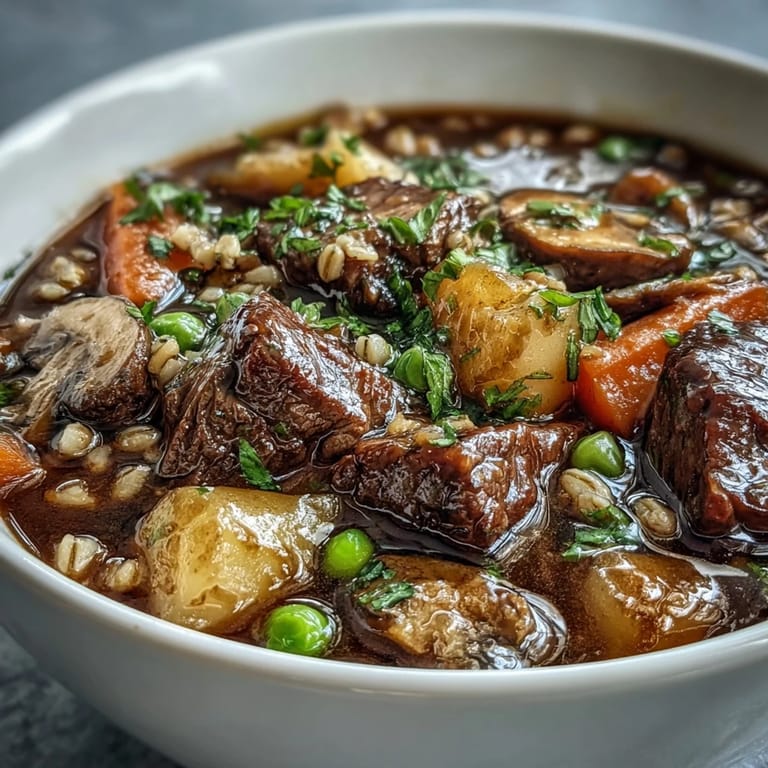
Save There's something about the smell of beef browning in a hot pot that instantly transports me back to a chilly October evening when my neighbor stopped by unexpectedly and I had almost nothing prepared. I threw together what I had—some beef, barley, vegetables from the crisper—and by the time we'd caught up over wine, this soup had become the most natural thing on the stove. It's been my go-to ever since whenever I need something that feels both effortless and deeply satisfying.
I made this for my dad during his first week back at work after recovering from the flu, and watching him have three bowls told me everything. He said it reminded him of soups my grandmother used to make, which meant more to me than any compliment ever could. That's when I realized this recipe had become more than just dinner—it was comfort in a bowl.
Ingredients
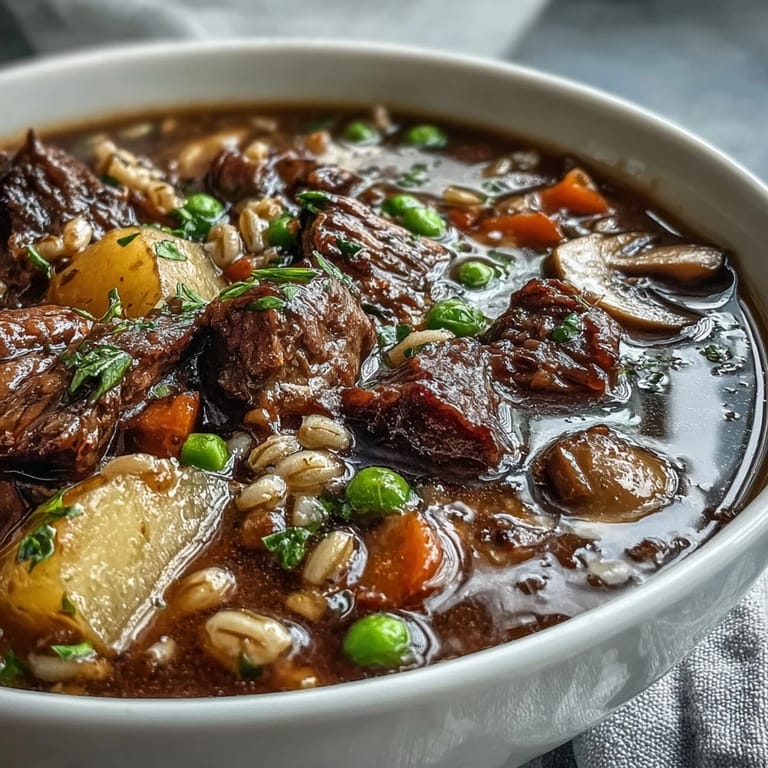
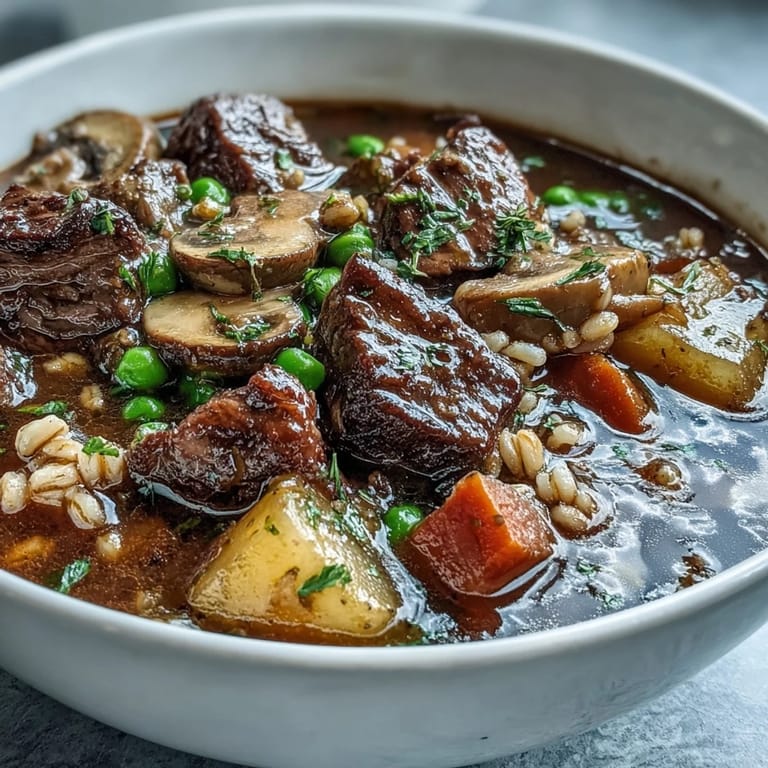
- Beef stew meat (1 lb, cut into 1-inch cubes): Brown beef really well before simmering—those caramelized bits are where all the flavor lives, and don't skip this step even if you're in a hurry.
- Pearl barley (3/4 cup, rinsed): A quick rinse removes excess starch and prevents the soup from becoming gluey, plus it adds a wonderful nutty texture that transforms as it cooks.
- Carrots (2 medium, diced): Cut them the same size as your other vegetables so everything cooks at the same pace and looks intentional in the bowl.
- Celery (2 stalks, diced): This is your flavor foundation—don't skimp on it even though it will nearly disappear into the broth.
- Onion (1 large, chopped): Yellow onions work best here because they sweeten as they cook and create a rich base for everything else.
- Garlic (2 cloves, minced): Add it after the softer vegetables so it doesn't burn and turn bitter before the soup even simmers.
- Potatoes (1 cup, diced): Waxy potatoes hold their shape better than mealy ones, keeping your soup from turning into mush.
- Mushrooms (1 cup, sliced): They add earthiness and umami that makes people wonder if there's something mysterious in the pot—don't tell them it's just mushrooms.
- Frozen peas (1 cup): Add these at the very end so they stay bright green and tender instead of turning gray and soft.
- Diced tomatoes (1 can, optional): Use these if you want extra acidity and depth, but the soup is equally wonderful without them.
- Beef broth (8 cups): Quality broth makes a real difference—if you can use homemade, you'll taste why everyone asks for your recipe.
- Bay leaves (2): These infuse the entire pot with subtle flavor that's hard to identify until they're gone, so don't forget to fish them out before serving.
- Dried thyme and parsley (1 tsp each): Dried herbs work perfectly here because the long simmer time lets them fully release their flavor.
- Olive oil (2 tbsp): Use good oil for browning the beef—cheap oil smokes and tastes acrid compared to something you'd actually use on salad.
- Salt and black pepper (to taste): Always taste and adjust at the very end because flavors concentrate as the soup simmers.
Tired of Takeout? 🥡
Get 10 meals you can make faster than delivery arrives. Seriously.
One email. No spam. Unsubscribe anytime.
Instructions
- Brown the beef until it's golden:
- Heat oil in your pot over medium-high heat and let it shimmer before adding beef—if the oil isn't hot enough, the meat will steam instead of brown. Work in batches if needed so the beef isn't crowded, and don't move it around too much; let each side develop that delicious caramelized crust.
- Build your flavor base with the vegetables:
- Once the beef is out, add onions, carrots, celery, and mushrooms to the same pot and let them soften for about five minutes, scraping up all those flavorful brown bits stuck to the bottom. You'll hear the sizzle and smell the sweet vegetables—that's exactly what you want.
- Add garlic at just the right moment:
- Stir in minced garlic and cook for about a minute until fragrant, being careful not to let it brown. This is a quick step but absolutely necessary—raw garlic would overpower the soup and cooked garlic melds everything together.
- Return the beef and build the broth:
- Put the beef back in with the potatoes, barley, tomatoes if using, broth, and all your herbs. Bring everything to a boil, which should take about five minutes, then immediately reduce the heat to low and cover the pot.
- Let time do the work:
- Simmer covered for an hour, stirring occasionally so nothing sticks to the bottom. The barley will gradually soften and the beef will become tender, and the whole kitchen will smell incredible.
- Finish strong with the peas and final seasoning:
- Remove the cover, stir in the frozen peas, and taste carefully before adding salt and pepper—remember that you've already got seasoned broth and the flavors have concentrated. Simmer uncovered for another twenty to thirty minutes until the barley is completely tender and the peas are bright green.
- Serve with intention:
- Fish out those bay leaves, ladle the soup into bowls, and serve it hot with good bread alongside. The moment people take that first spoonful is worth every minute you spent on it.
 Save
Save 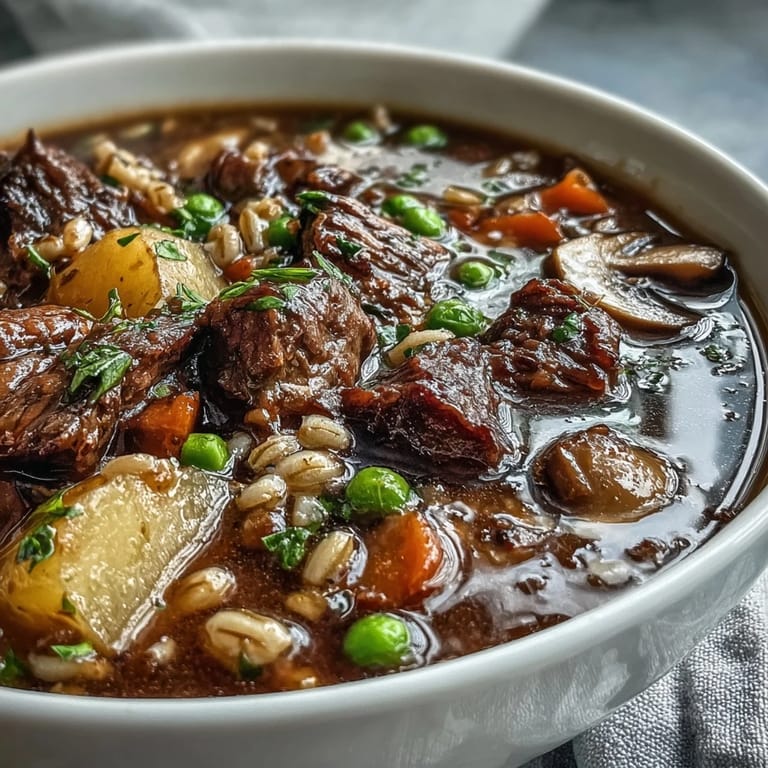 Save
Save My sister brought her new boyfriend over for dinner and asked what I was making, and when I said beef and barley soup, he looked genuinely disappointed. An hour later he was asking if I could write down the recipe, which made the whole meal feel like a small victory. Simple food made with attention has a way of impressing people far more than anything complicated ever could.
Why This Soup Never Gets Old
The beautiful thing about beef and barley soup is that it changes subtly each time you make it depending on what you have on hand and how long you let it simmer. Sometimes I add extra mushrooms when I find them on sale, other times I toss in parsnips or celery root if I'm feeling experimental. It's flexible enough to become your own, but structured enough that it always turns out right.
Storage and Reheating for the Week Ahead
This soup actually tastes better on day two or three because the flavors continue developing even in the refrigerator, so there's zero guilt about making a big batch. Let it cool completely before storing in airtight containers, and it will keep for four days in the fridge or three months in the freezer, making it perfect for those nights when you need dinner without cooking. When you reheat, add a splash of broth or water since the soup will have absorbed liquid, and taste again for seasoning because salt flavor can change after freezing.
The Bread and Wine Question
Crusty bread is non-negotiable alongside this soup because you'll want something to soak up every drop from your bowl, and there's something almost ceremonial about tearing bread and dunking it. A robust red wine like Côtes du Rhône or a simple Cabernet pairs beautifully—the tannins cut through the richness and the wine's earthiness echoes the mushrooms and herbs. Pour yourself a glass while you're cooking and you've already made the evening feel special.
- Toast your bread slices in a hot oven for two minutes so they're crispy on the outside but still soft enough to soak in broth without falling apart.
- If you don't have wine to drink, a splash of red wine in the soup itself adds complexity, though it's equally wonderful without it.
- Serve the soup in warm bowls instead of cold ones—it makes such a difference and shows you actually care about the eating experience.
 Save
Save 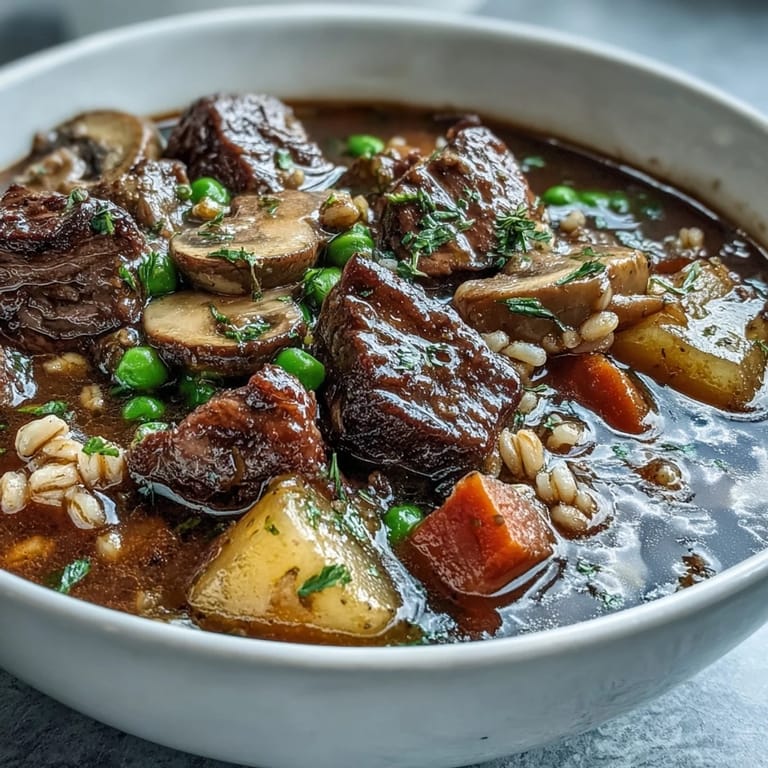 Save
Save Beef and barley soup has become my answer to almost any occasion—when someone's sick, when the weather turns cold, when I want to feel accomplished without stress. It's proof that the best food doesn't require complexity, just good ingredients and the patience to let them become something better together.
Recipe Questions
- → Can I use a different cut of beef?
Yes, you can use chuck roast, round, or short ribs cut into cubes. Choose well-marbled cuts for the most tender, flavorful results.
- → Can I make this in a slow cooker?
Absolutely. Brown the beef first, then transfer everything to a slow cooker and cook on low for 6-8 hours or high for 3-4 hours until tender.
- → What can I substitute for pearl barley?
Try farro, wild rice, or brown rice. Adjust cooking times accordingly as these grains may require different simmering durations.
- → How do I store and reheat leftovers?
Store in an airtight container in the refrigerator for up to 4 days. Reheat gently on the stovetop, adding a splash of broth if needed to thin.
- → Can I freeze this soup?
Yes, this freezes beautifully for up to 3 months. Cool completely before transferring to freezer-safe containers, leaving space for expansion.
- → Why is my barley still hard after cooking?
Pearl barley needs adequate liquid and time. Ensure there's enough broth and simmer for the full 90 minutes, checking tenderness before serving.