 Save
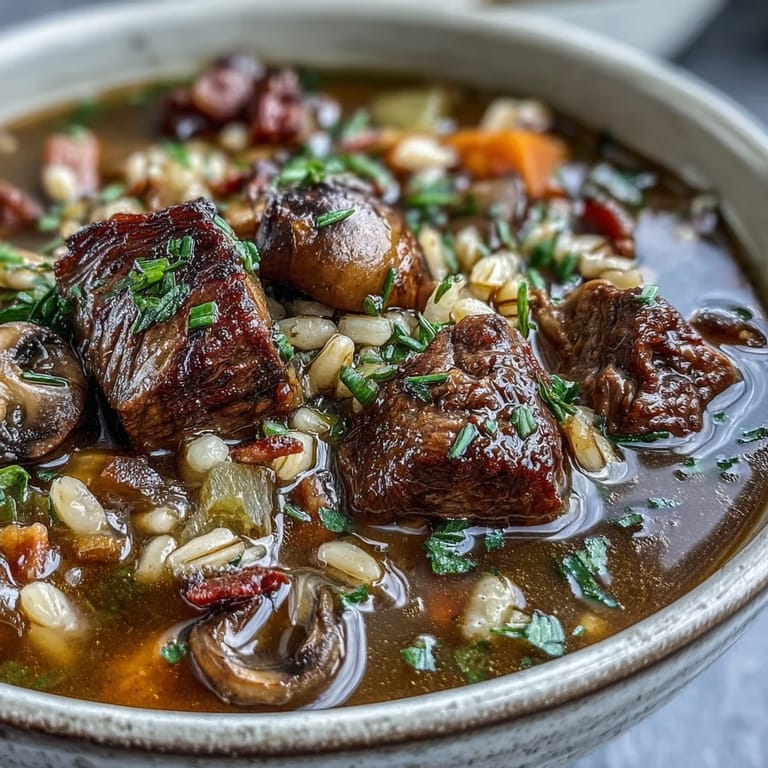
Save There's something about the sound of pancetta hitting a hot pot that signals comfort is coming. I was sorting through a particularly gray November afternoon when a friend texted me a photo of her steaming bowl of beef and barley soup, and suddenly I remembered why this dish had become my go-to remedy for everything from bad days to lazy Sundays. The combination of tender beef, earthy mushrooms, and those chewy pearls of barley creates a soup that feels substantial enough to be a meal, yet light enough that you can eat it without guilt.
I made this for my brother when he came home from a long work trip, and watching him slurp a spoonful and immediately go quiet told me everything I needed to know. He had thirds, and when he left the next morning, I sent him home with a quart container of leftovers. That's when I realized this soup had graduated from weeknight dinner to something people actually request.
Ingredients
- Beef chuck roast, cut into 1/2-inch cubes: This cut has enough marbling to stay tender during the long simmer, and the irregular pieces actually catch and hold the broth better than uniform cubes.
- Pancetta, diced: The rendered fat becomes your flavor base, and those crispy bits add texture that keeps each spoonful interesting.
- Baby bella mushrooms, sliced: They're earthier than button mushrooms and hold their shape better during cooking without turning rubbery.
- Yellow onion, diced: The sweetness builds as it cooks down, balancing the savory beef and creating the soup's flavor foundation.
- Carrots and celery, diced: Together with the onion, they form the aromatic base that makes your kitchen smell like a restaurant kitchen.
- Garlic cloves, minced: Add this after the other vegetables soften so it doesn't burn and turn bitter.
- Pearl barley, rinsed: Rinsing removes excess starch that would make the broth cloudy, and the barley absorbs the broth flavors as it cooks.
- Beef broth, low sodium: Low sodium gives you control over the final salt level, and you can always add more seasoning but can't take it out.
- Tomato paste: Two tablespoons gives umami depth without making the soup taste tomatoey.
- Bay leaves, dried thyme, and dried rosemary: These aromatics infuse the broth with complexity that tastes like you know what you're doing.
- Olive oil: Two tablespoons total, split between rendering the pancetta and sautéing vegetables.
Tired of Takeout? 🥡
Get 10 meals you can make faster than delivery arrives. Seriously.
One email. No spam. Unsubscribe anytime.
Instructions
- Start with the pancetta:
- Heat a tablespoon of olive oil in your heavy pot over medium-high heat and let the diced pancetta render for about 3-4 minutes. You'll know it's ready when the edges turn golden and the fat starts shimmering in the bottom of the pot. Scoop it out with a slotted spoon and set it aside, leaving all that beautiful rendered fat behind.
- Sear the beef in batches:
- Pat your beef cubes dry with a paper towel, then season them generously with salt and pepper. Working in batches so you don't crowd the pot, lay the cubes in a single layer and let them sit undisturbed for 2-3 minutes before stirring. You want a deep brown crust, which takes about 5-6 minutes per batch, then transfer each batch to a plate.
- Build the flavor base:
- Add the remaining olive oil and sauté your diced onion, carrots, and celery until the edges of the onion start to soften and turn translucent, about 5 minutes. You'll smell the sweetness developing. Stir in the garlic and let it sit for just a minute until it becomes fragrant, being careful not to let it brown.
- Add the mushrooms:
- Stir in your sliced mushrooms and cook for 6-8 minutes, stirring occasionally, until they release their liquid and start to brown at the edges. This is when your kitchen smells absolutely incredible. Add the tomato paste and stir constantly for about a minute to cook it into the vegetables.
- Bring it all together:
- Return the beef and pancetta to the pot, then add your rinsed barley, bay leaves, thyme, rosemary, beef broth, and water. Bring everything to a boil, then immediately reduce the heat to low, cover the pot, and let it simmer gently for 1.5 hours, stirring every 20 minutes or so.
- Finish and serve:
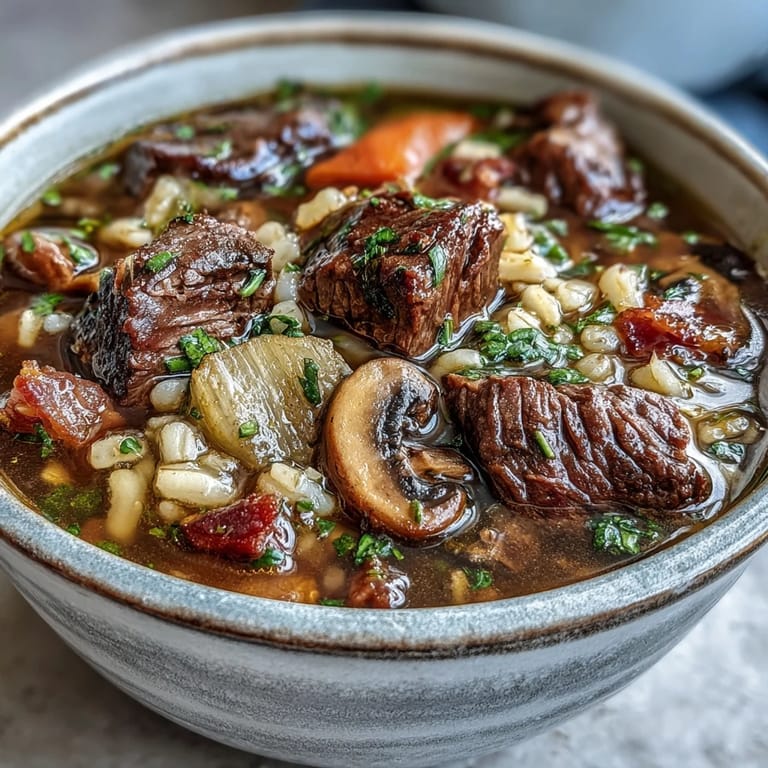
- The soup is ready when the beef falls apart with a wooden spoon and the barley is tender but still has a slight bite. Fish out the bay leaves, taste the broth, and adjust the salt and pepper as needed. Ladle into bowls and scatter fresh parsley on top if you have it.
 Save
Save Last winter, my neighbor smelled this soup simmering and knocked on my door asking what I was making. I gave her a bowl to take home, and she returned the dish with a note saying she'd made it twice since then. That's when I knew this wasn't just a recipe—it was something that builds community.
The Magic of Long Simmering
This soup lives in that sweet spot where low and slow cooking transforms individual ingredients into something greater than the sum of their parts. The broth becomes silky from the collagen in the beef, the vegetables essentially disappear into the liquid to create depth, and the barley acts like a sponge, pulling all those flavors into each grain. You're not rushed here—the 1.5 hours is your friend, not your enemy.
Why Pancetta Over Bacon
Pancetta has a deeper, more savory flavor than American bacon because it's cured differently and doesn't have that smoky backbone. When you render it in the pot, it creates a richer fat that becomes the foundation for everything that follows. That said, if you only have bacon, it works fine—you'll just get a slightly smokier result, which isn't wrong, just different.
Variations and Flexibility
This recipe is forgiving enough to accommodate what you have on hand or what you're in the mood for. I've made it with red wine stirred in just before the final simmer, and I've added extra mushrooms when I found a good sale. The barley can be swapped for farro or even brown rice if you want to experiment, though you might need to adjust the cooking time slightly.
- Substitute half the beef broth with mushroom broth or add a splash of dry red wine before simmering for a deeper, more complex flavor.
- For a gluten-free version, use brown rice or another gluten-free grain in place of the barley, adjusting the cooking time accordingly.
- If pancetta feels fancy or you can't find it, bacon works perfectly fine in a pinch.
 Save
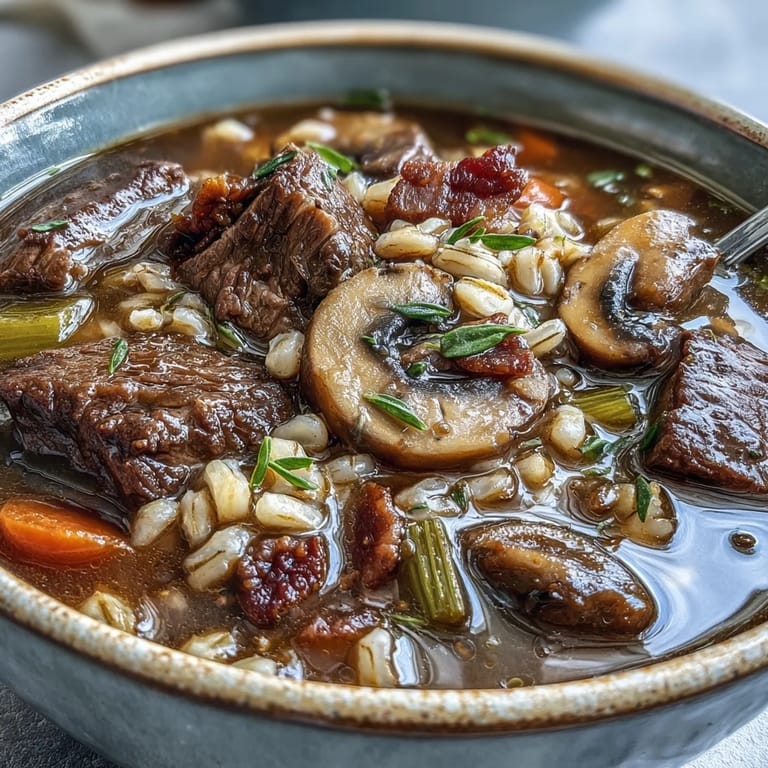
Save This soup has become my answer to so many moments—a way to say I care without fussing, a reason to have someone over on a cold night, a thing to make when life feels uncertain. There's comfort in knowing that good food and a warm bowl can still mean something.
Recipe Questions
- → Can I use a different cut of beef?
Yes, you can substitute beef chuck with beef stew meat or short ribs. Chuck roast is ideal because it becomes tender during the long simmering process and adds rich flavor to the broth.
- → How do I store leftovers?
Store in an airtight container in the refrigerator for up to 4 days. The barley will continue to absorb liquid, so you may need to add extra broth when reheating. Freezes well for up to 3 months.
- → Can I make this in a slow cooker?
Absolutely. Brown the beef and pancetta on the stovetop first, then transfer everything to a slow cooker. Cook on low for 6-8 hours or high for 4-5 hours until beef is tender and barley is cooked through.
- → What can I substitute for pancetta?
Bacon is the best substitute for pancetta and will provide similar smoky, salty flavor. You can also omit it entirely for a lighter version, though you'll lose some depth of flavor.
- → Why is my barley still hard after cooking?
Pearl barley typically takes 45-60 minutes to cook. If it's still hard after 1.5 hours, continue simmering with additional liquid until tender. Old barley may take longer to cook than fresh.
- → Can I add other vegetables?
Yes, parsnips, turnips, potatoes, or green beans work wonderfully. Add heartier vegetables at the beginning and quicker-cooking greens during the last 10 minutes of cooking.