 Save
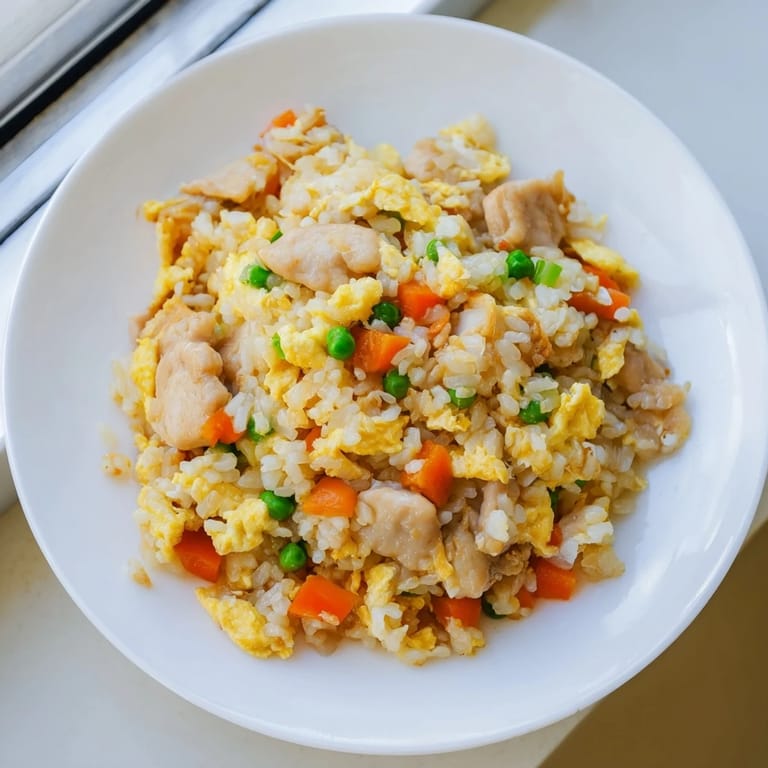
Save There's something magical about the sound of a wok hitting high heat, that sizzle that promises something delicious in minutes. I discovered chicken fried rice during a chaotic weeknight when I had leftover rice, a few vegetables, and the realization that takeout could wait. What started as improvisation became my go-to meal whenever I needed something warm, satisfying, and genuinely homemade without the stress.
I remember cooking this for my sister on a lazy Sunday afternoon, watching her eat directly from the wok with chopsticks while sitting on the kitchen counter, barely letting it cool. She asked for the recipe that day, and now it's become her version of comfort food too. That moment taught me that the best recipes are the ones people actually make, not the ones they save and forget.
Ingredients
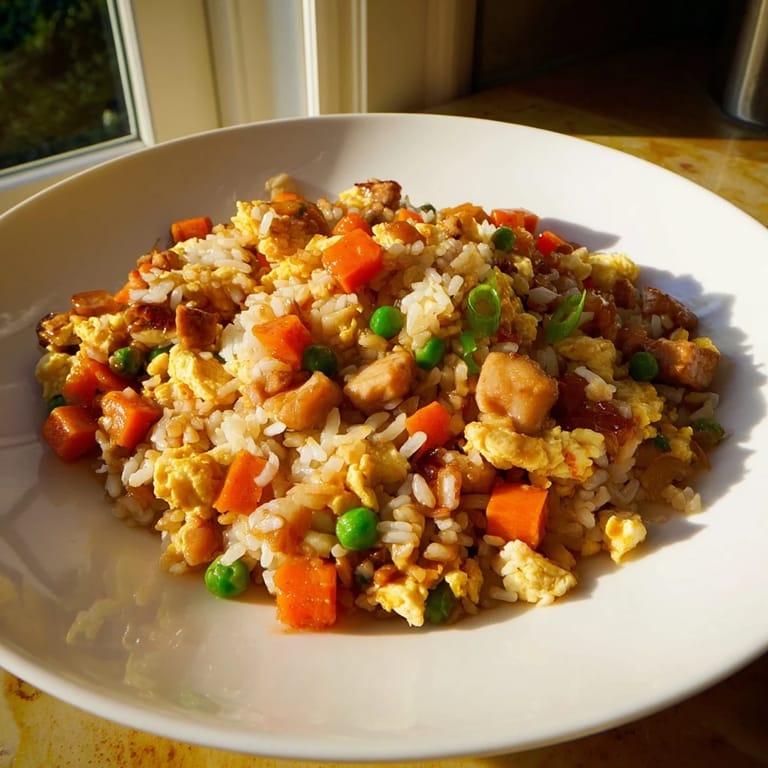
- Chicken breast or thigh, diced: Thighs stay more tender and forgiving, though breasts work beautifully if you don't overcook them—aim for that golden exterior but moist inside.
- Eggs: They scramble right into the rice, creating little pockets of richness that make every bite feel special.
- Carrot and onion: These are your aromatic base, building flavor as they soften and caramelize slightly in the heat.
- Frozen peas: They thaw instantly and add sweetness and color—fresh or canned work too, just drain them well.
- Spring onions: Added at the end, they bring a sharp, fresh note that cuts through the savory richness perfectly.
- Day-old jasmine or long-grain rice: This is non-negotiable for the best texture; fresh rice releases too much starch and turns mushy no matter how hard you stir.
- Soy sauce and sesame oil: The backbone of flavor—soy brings saltiness and depth while sesame adds that signature toasted aroma.
- Oyster sauce: Optional but transforms the dish, adding umami depth that makes people ask what your secret ingredient is.
- White pepper: Subtler than black pepper, it distributes evenly and adds warmth without visible specks.
- Vegetable oil: High heat demands a neutral oil that won't smoke or impose its own flavor.
Tired of Takeout? 🥡
Get 10 meals you can make faster than delivery arrives. Seriously.
One email. No spam. Unsubscribe anytime.
Instructions
- Gather and prep everything first:
- Mise en place isn't fancy—it's survival when you're cooking over high heat and things move fast. Dice your chicken, chop your vegetables, crack your eggs into a bowl, and have your sauces lined up. This 5-minute setup prevents panicked scrambling later.
- Sear the chicken golden:
- Heat oil until it shimmers, then add chicken. Let it sit for a moment before stirring—this creates that golden crust that tells you the Maillard reaction is happening. Cook about 4 to 5 minutes until cooked through with a slight golden edge.
- Build the vegetable base:
- Fresh oil goes in, then onion and carrot get a gentle sauté for 2 to 3 minutes until they soften and sweeten. Add peas for just a minute more—they cook almost instantly from the residual heat.
- Create egg ribbons:
- Push everything to the side, crack eggs into the empty space, and let them set slightly before scrambling them gently. They'll look a little undercooked, but that's intentional—they'll finish cooking as you mix everything together.
- Introduce the rice:
- This is where texture matters most. Break up clumps with your spatula, making sure each grain gets kissed with oil. This takes 2 to 3 minutes and transforms rice from sticky to separate and fluffy.
- Reunite and season:
- Chicken comes back, sauces go in, and here's where you taste and adjust. Soy sauce, oyster sauce, sesame oil, white pepper—they coat everything evenly in about 2 minutes. This is your moment to decide if it needs more salt or a touch more sesame warmth.
- Finish with fresh spring onions:
- They go in at the very last second so they stay crisp and sharp, not wilted into submission. Taste one final time and adjust seasoning—salt, pepper, more soy, whatever calls to you.
 Save
Save The real magic happened the night I served this to someone who claimed they could never cook. I walked them through it step by step, and watching their face when that wok sizzle happened for the first time—when they realized they'd just made restaurant-quality food in their own kitchen—that's when I understood this recipe isn't about ingredients. It's about permission to trust yourself in the kitchen.
Why Day-Old Rice Is Your Secret Weapon
Fresh rice is full of moisture, and moisture is the enemy of fried rice. When you use warm or freshly cooked rice, all that steam gets trapped between the grains, and no matter how hot your wok or how hard you stir, everything clumps together into a soft, mushy mess. But chilled rice from yesterday, spread out and dried slightly in the refrigerator overnight, separates into individual grains that absorb flavor instead of absorbing more moisture. I learned this the hard way, producing batch after batch of gluey disappointment until someone finally told me the oldest rice in the back of the refrigerator was actually the answer.
Customizing Your Fried Rice Adventure
This recipe is a framework, not a rule book. Shrimp instead of chicken takes 2 minutes to cook and brings a different kind of elegance. Tofu, pressed and cubed, picks up flavors beautifully and feeds the vegetarians in your life. Bell peppers add sweetness and crunch, bean sprouts bring a delicate texture, corn adds a touch of sweetness. I've made versions with cashews for crunch, kimchi for heat and funk, and even pineapple when I was feeling adventurous. The wok doesn't judge—it just responds to whatever you feed it with heat and care.
Building Flavor and Knowing When to Stop
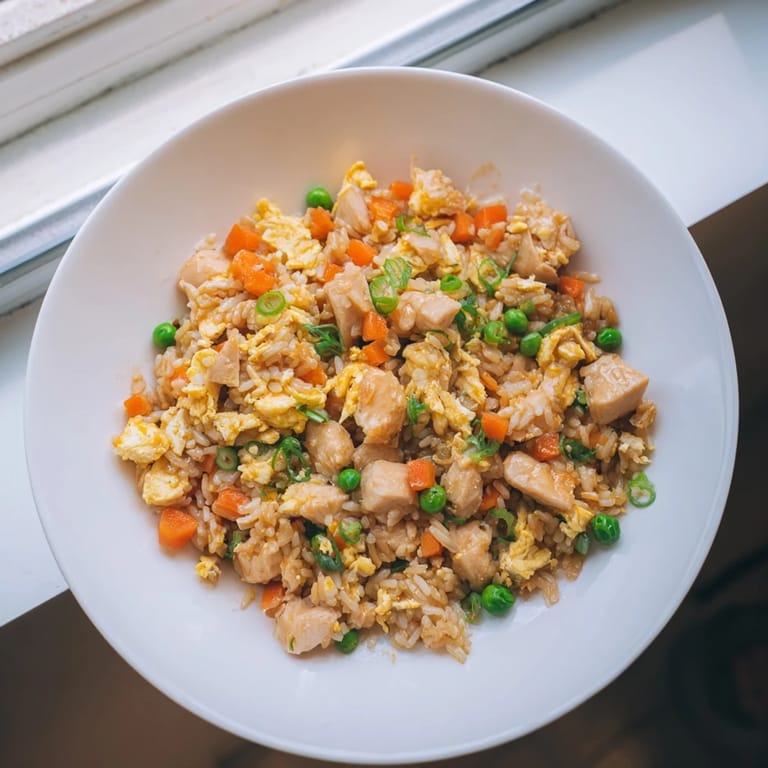
Fried rice teaches you that restraint is an ingredient too. You could add 10 different sauces and 15 vegetables, but then you lose the clarity of flavor that makes this dish sing. I learned to taste constantly, adjusting salt and soy sauce in small increments, remembering that you can always add more but you can never take it back. The best fried rice I've ever made had exactly four elements singing: the umami of soy and oyster sauce, the warmth of sesame oil and white pepper, the sweetness of caramelized onion and peas, and the savory depth of golden chicken and egg. Everything else was support.
- Let sauces coat the rice gently; vigorous stirring after the final seasoning can break down the grains into mush.
- Serve immediately—fried rice waits for no one, and it's best enjoyed while still steaming and the spring onions are still crisp.
- Leftover fried rice reheats beautifully in a wok with a splash of water, becoming almost as good as day-old rice does in the original cooking.
 Save
Save This recipe has fed me through late nights, unexpected guests, and moments when I needed to feel capable in the kitchen. It's simple enough to make when you're tired, flexible enough to use whatever's in your refrigerator, and delicious enough to remind you why cooking for yourself matters.
Recipe Questions
- → What type of rice is best for this dish?
Day-old jasmine or long-grain rice works best as it’s drier and prevents clumping during stir-frying, creating a better texture.
- → Can I substitute chicken with other proteins?
Yes, shrimp, pork, or tofu can be swapped in depending on your preference or availability.
- → What vegetables enhance the flavor of this stir-fry?
Carrots, peas, onions, and spring onions add color, crunch, and sweetness that complement the savory elements.
- → Why is sesame oil added at the end?
Sesame oil is added near the end to preserve its rich aroma and enhance the overall flavor without burning.
- → How do I ensure the chicken remains tender?
Cooking chicken over medium-high heat until just golden and cooked through helps retain juiciness without drying it out.