 Save
Save The first time I made deep dish pizza, I wasn't trying to recreate Chicago—I was just hungry and had a cast iron skillet that seemed too deep for regular pizza. My friend Marcus showed up unannounced on a Saturday afternoon, and instead of ordering takeout like we usually did, I decided to wing it with yeast, flour, and whatever cheese was in my fridge. That decision changed everything about how I cook now.
I'll never forget the look on my mom's face when she bit into a slice at my place three years later—she'd grown up eating thin crust her whole life, and suddenly she understood why people drove across the city for this specific style. That pizza sat on my kitchen counter for maybe twenty minutes before everyone crowded around it, and there weren't any leftovers by the end of the night.
Ingredients
- All-purpose flour (3 1/4 cups): This is your foundation—it develops gluten when you knead it, which gives the crust structure and chew.
- Yellow cornmeal (1/2 cup): Don't skip this; it's what gives deep dish its signature texture and helps the crust get crackling at the edges.
- Active dry yeast (2 1/4 teaspoons): One packet, activated in warm water first—this is how you get that rise and those tiny air pockets that make each bite interesting.
- Warm water (1 1/4 cups): Should feel like a warm bath on your wrist, around 110°F—too hot kills the yeast, too cold and nothing happens.
- Olive oil (1/4 cup) and melted butter (2 tablespoons): The oil adds flavor and helps with texture; the butter is what makes the crust taste like butter, honestly.
- Mozzarella cheese (3 cups): Use the whole milk kind if you can—pre-shredded stuff has anti-caking agents that make it clump.
- Parmesan cheese (1/2 cup): This goes on top and browns slightly, adding a salty, nutty note that makes you keep eating.
- Crushed tomatoes (28 oz can): The backbone of your sauce—canned is actually better here than fresh because it concentrates the flavor.
- Garlic (3 cloves), oregano and basil (1 teaspoon each): These three are the holy trinity of pizza sauce; together they're unmistakable.
Tired of Takeout? 🥡
Get 10 meals you can make faster than delivery arrives. Seriously.
One email. No spam. Unsubscribe anytime.
Instructions
- Wake up the yeast:
- Pour warm water into a bowl, sprinkle yeast over it, and wait five minutes until it's foamy on top—this tells you the yeast is alive and ready to work.
- Build the dough:
- Mix in flour, cornmeal, salt, olive oil, and melted butter until shaggy, then knead for five to seven minutes until it's smooth and slightly elastic. Your hands will tell you when it's right—it should feel alive, not sticky.
- Let it rise:
- Place the dough in a greased bowl, cover it loosely, and set it somewhere warm for an hour until it roughly doubles in size. A kitchen corner away from drafts works perfectly.
- Make your sauce while waiting:
- Heat olive oil in a saucepan, cook the minced garlic until fragrant but not brown, then add crushed tomatoes, oregano, basil, and a pinch of sugar to balance the acidity. Simmer gently for twenty minutes, stirring now and then, until it tastes less raw and more like sauce.
- Set your stage:
- Preheat your oven to 425°F and grease a twelve-inch deep-dish pan with olive oil so the crust slides freely when it's done.
- Stretch and press:
- Pull your risen dough out onto the pan and press it gently outward, working it up the sides to create that signature high wall. Don't use a rolling pin—your hands know better what thickness feels right.
- Layer like you mean it:
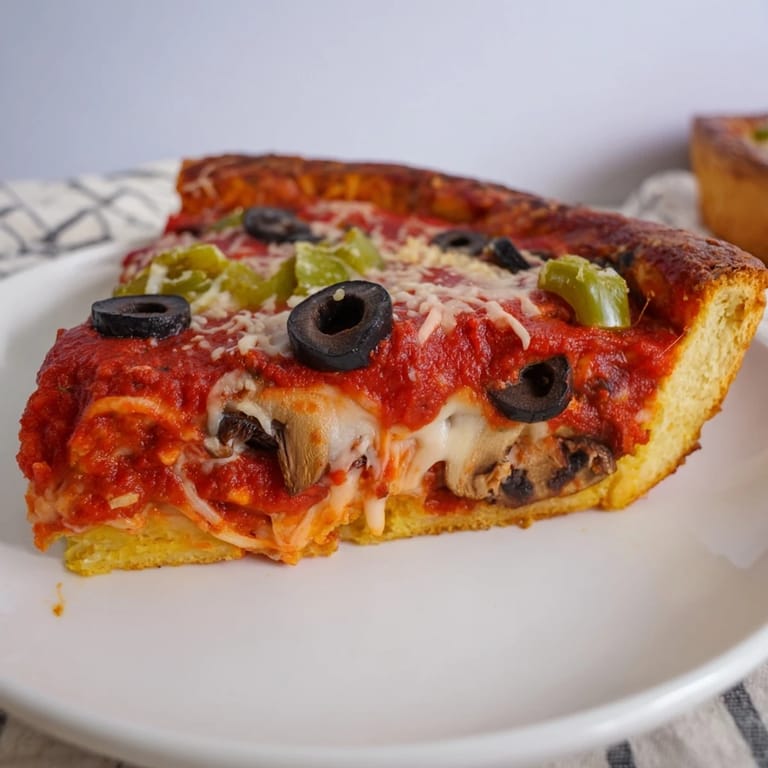
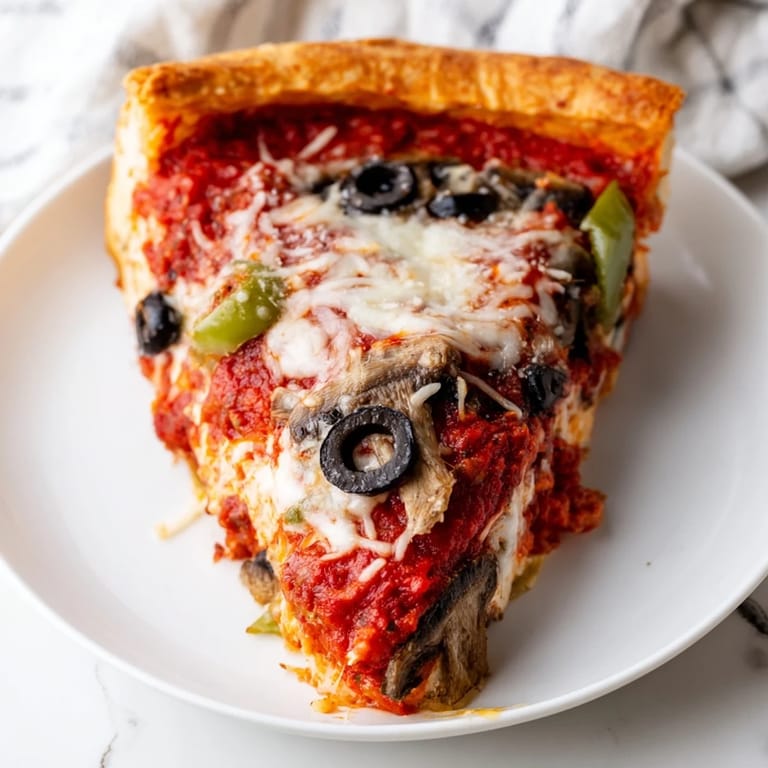
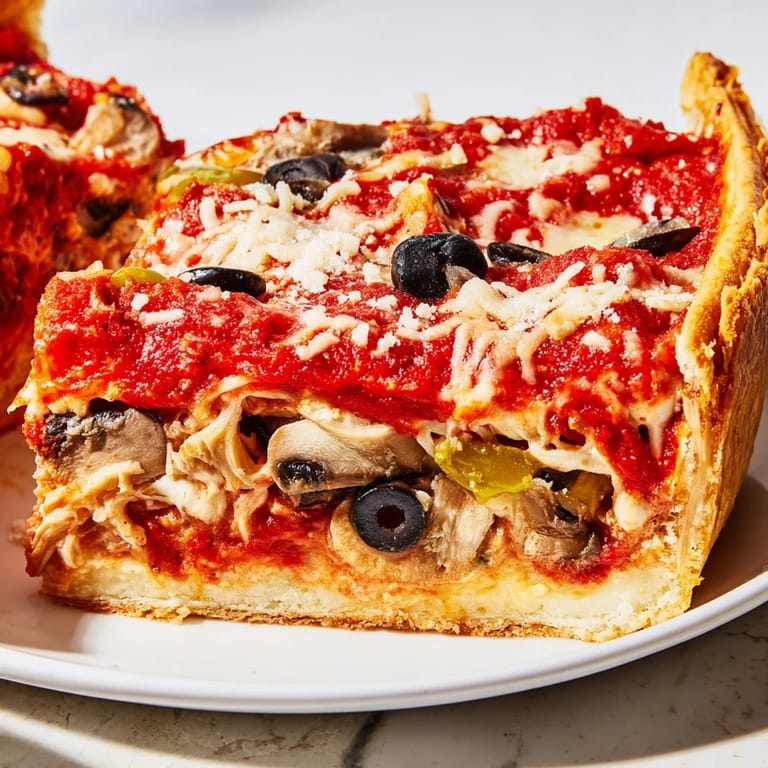
- Spread mozzarella evenly across the dough base, add your toppings (pepperoni, mushrooms, whatever you're using) in a single layer, then drape the sauce over everything and finish with Parmesan.
- Bake until golden:
- Slide it into the oven for thirty-five to forty minutes—the crust should be deep golden and the sauce should bubble at the edges. If the crust edges brown too fast, cover them loosely with foil for the last ten minutes.
- Rest before cutting:
- Let the pizza sit for ten minutes after it comes out of the oven; this lets the cheese set slightly so each slice holds together instead of sliding into a heap.
 Save
Save There's something about deep dish that brings people together in a way regular pizza doesn't—maybe it's because you can only fit one or two slices on a plate, so everyone ends up sitting around longer, talking, reaching for napkins. I started making it regularly after that first attempt, and it became the dish I cooked when I wanted to show someone I actually cared about feeding them properly.
Why the Cornmeal Matters
I learned about cornmeal the hard way after my first three attempts turned out gummy instead of crispy. A neighbor who'd lived in Chicago for years finally told me the secret—cornmeal gives the crust texture and helps it brown, plus it adds a subtle sweetness that plays beautifully against the acidic sauce. Now I never make this pizza without it, and honestly, it's become non-negotiable in my kitchen.
Building the Sauce Right
Your sauce needs time to settle and lose that raw tomato harshness—that's the whole point of simmering it for twenty minutes instead of using it straight from the can. The garlic should be cooked gently, not browned, because burnt garlic tastes bitter and ruins everything it touches. The sugar is a quiet player here, just enough to round out the acidity without making anything taste sweet.
Making This Work for You
Deep dish is forgiving enough that you can experiment without fear—swap in provolone with your mozzarella if you want a sharper taste, or load up on vegetables if you're cooking for people who don't eat meat. The dough stays the same, the sauce stays the same, and everything else is yours to play with.
- If you're short on time, store-bought pizza dough works fine—just make sure to let it come to room temperature before stretching it into the pan.
- Leftover sauce keeps in the fridge for three days and freezes beautifully, so you can make a double batch and have it ready for next time.
- A light Italian red like Chianti or Barbera cuts through the richness perfectly if you're serving wine, but honestly, cold beer does the job just as well.
 Save
Save This pizza has become the thing I make when I want to feel like I'm cooking something real, something with presence, instead of just assembling dinner. Every time the oven door opens and that smell hits, it reminds me why I fell in love with cooking in the first place.
Recipe Questions
- → What type of crust is used in this deep dish?
The crust is thick and buttery, made from a blend of all-purpose flour and yellow cornmeal, which gives it a unique texture and flavor.
- → Can I make this dish vegetarian?
Yes, simply omit the meat toppings like pepperoni or sausage and add more vegetables such as mushrooms, bell peppers, and olives.
- → How long should the dough rise?
The dough needs to rise for about 1 hour or until it doubles in size before being pressed into the pan.
- → What cheese varieties are used?
Mozzarella and grated Parmesan are used to create a rich, melty, and flavorful cheese layer.
- → How is the sauce prepared?
The sauce is made by sautéing garlic in olive oil, then simmering crushed tomatoes with oregano, basil, sugar, salt, and pepper for 20 minutes.
- → What oven temperature is recommended for baking?
Bake at 425°F (220°C) for 35–40 minutes until the crust is golden and the sauce is bubbly.