 Save
Save My aunt's kitchen smelled like lemon and butter every Easter morning, and I'd find her at the counter rolling out pastry with the kind of practiced ease that made it look effortless. She never wrote down her ricotta pie recipe—it lived in her hands, in the way she'd zest lemons with her eyes closed like she was remembering something sweet. Years later, standing in my own kitchen during a quiet spring afternoon, I realized I'd been recreating that same pie from memory, adjusting and tasting until it matched what I remembered from those mornings.
I made this for my mother-in-law's garden party three springs ago, and she took one bite, closed her eyes, and told me it tasted like where she grew up. She had me write down every step that day, which felt like an unexpected honor—like she was handing me permission to keep making it.
Ingredients
- All-purpose flour (2 cups for pastry, 2 tbsp for filling): The flour for the crust should be measured carefully—too much makes it tough, too little makes it crumbly. The small amount in the filling just helps set the eggs without adding density.
- Granulated sugar (3/4 cup total for pastry and filling): Split between the crust for subtle sweetness and the filling for that creamy, delicate flavor—never use less or the ricotta tastes flat.
- Cold unsalted butter (1/2 cup cubed): This is the foundation of a tender crust; keep it cold right until it hits the flour, and your pastry will shatter beautifully when you bite into it.
- Whole milk ricotta cheese (2 cups, well drained): Don't skip the draining step—excess moisture ruins the texture and makes the filling watery after baking.
- Fresh lemon zest (from 2 lemons): A microplane makes this task meditative; the zest should be fragrant enough that you smell it before you taste it.
- Heavy cream (1/4 cup): This softens the ricotta and creates that luxurious mouthfeel that makes the filling unforgettable.
- Eggs (4 total—1 whole plus 1 yolk for crust, 3 for filling): Room temperature eggs blend more smoothly into both dough and filling, creating a better texture.
- Powdered sugar for dusting: A light final dusting just before serving catches the light and tastes like a delicate promise.
Tired of Takeout? 🥡
Get 10 meals you can make faster than delivery arrives. Seriously.
One email. No spam. Unsubscribe anytime.
Instructions
- Make the pastry base:
- Combine flour, sugar, and salt in a bowl, then work in cold butter with your fingertips until it looks like breadcrumbs—this takes patience, but you're creating pockets that will turn into a tender crust. Mix in the egg, egg yolk, and vanilla, then add water a tablespoon at a time until the dough just holds together without being wet.
- Chill and rest:
- Wrap your dough disk in plastic and chill for at least 30 minutes—this prevents shrinking during baking and gives the gluten time to relax. While it rests, preheat your oven to 350°F and grease your pan.
- Line the pan:
- On a floured surface, roll the dough gently to fit your 9-inch pan, pressing it into the corners without stretching it too much. Prick the base with a fork, chill for 10 minutes more, and your crust is ready to hold the magic.
- Prepare the filling:
- In a large bowl, whisk together drained ricotta, sugar, eggs, vanilla, lemon zest, lemon juice, flour, salt, and cream until completely smooth—no lumps allowed. The mixture should look like silky custard, fragrant with fresh citrus.
- Assemble and bake:
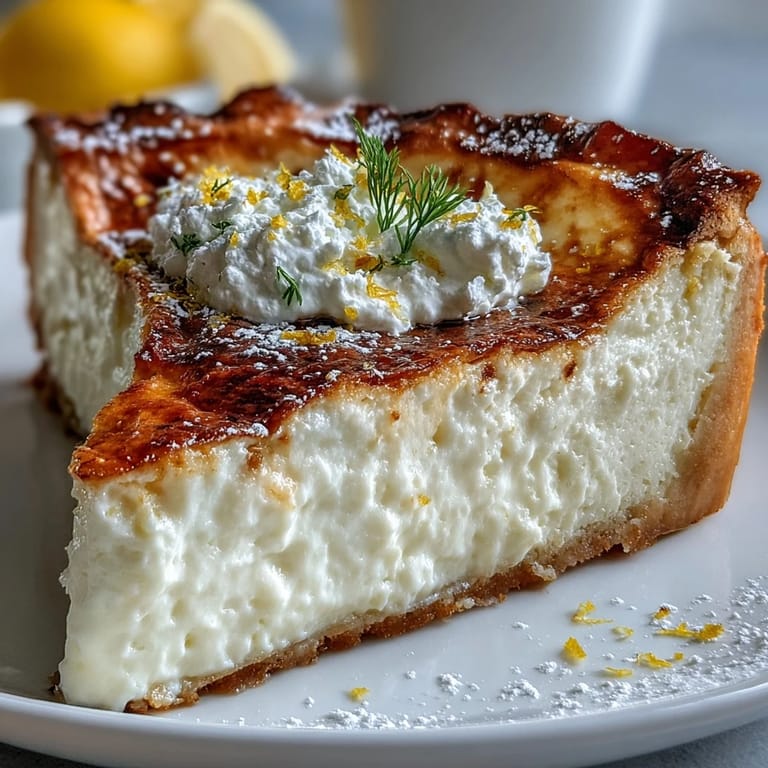
- Pour the filling into your pastry shell and smooth the top gently, then bake for 55 to 60 minutes until the edges are set but the very center has the tiniest wobble—this is how you know it's creamy inside, not dry. The top will turn a soft golden color, and your kitchen will smell like a dream.
- Cool with patience:
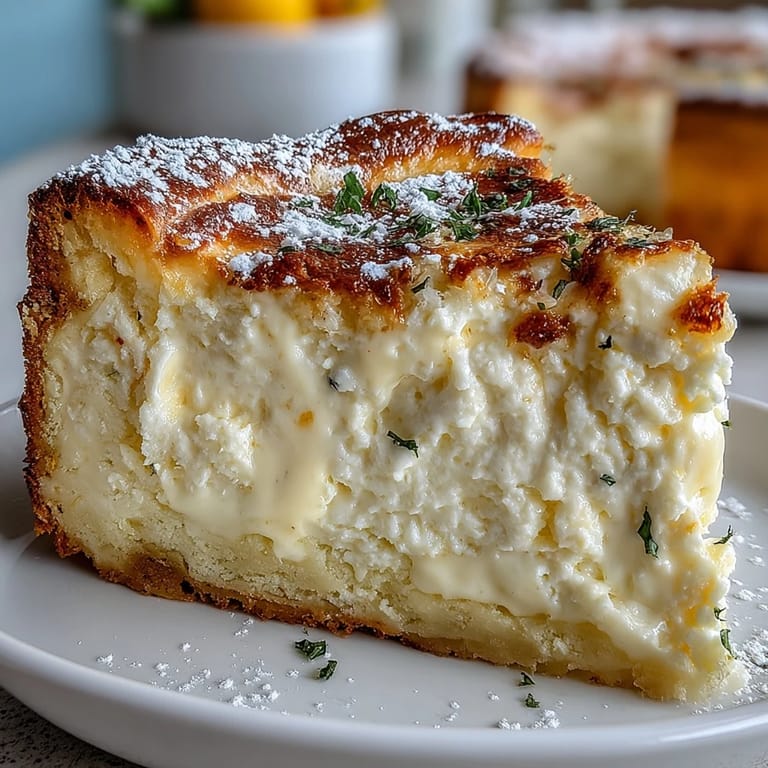
- Let it cool completely on a wire rack, then chill for at least 2 hours before slicing—this firms up the filling and makes each slice clean and beautiful. The wait is worth it; I promise.
- Finish with elegance:
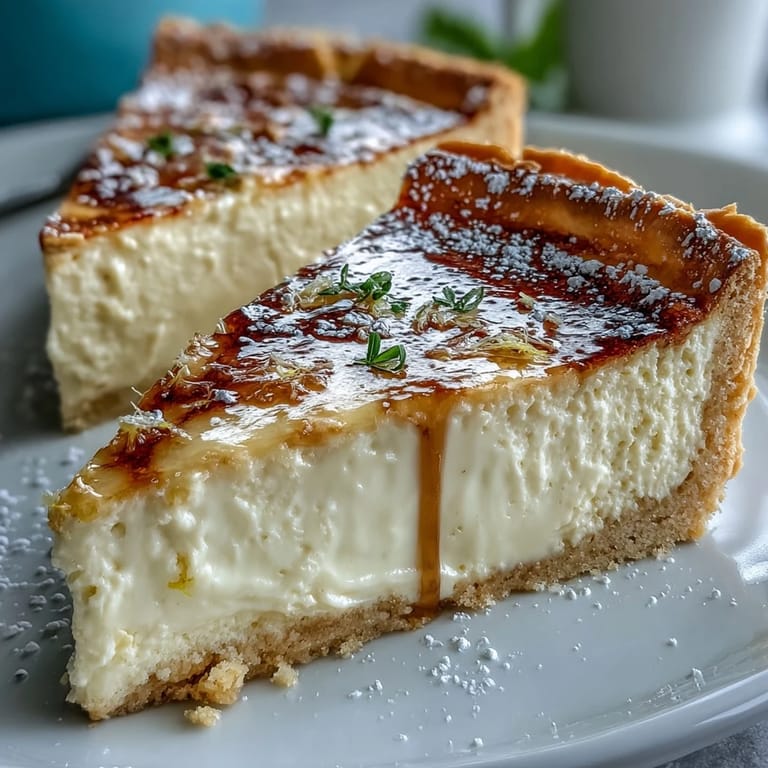
- Just before serving, dust the top with powdered sugar through a fine sieve for a soft, snow-like finish that makes it look bakery-perfect.
 Save
Save There's something about serving a homemade ricotta pie that changes a meal from ordinary to memorable—it's not just dessert, it's proof that you cared enough to spend an afternoon building flavor layer by layer. Every time someone takes that first bite and pauses, I know exactly what they're tasting: time, butter, lemon, and the particular magic that happens when ingredients are treated with respect.
The Story Behind This Classic
Ricotta pie has been part of Italian Easter celebrations for generations, brought over by grandmothers who refused to let their traditions fade in a new country. The filling represents rebirth and abundance, while the lemon zest whispers springtime into every spoonful—it's not just dessert, it's a season on a plate. When I make this, I'm participating in something older than my own kitchen, which feels important somehow.
Variations and Personal Touches
My friend adds a pinch of nutmeg to her filling, which sounds unusual until you taste how it deepens the lemon without overpowering it. I've experimented with orange zest alongside lemon for a more complex citrus note, and I've brushed the crust with a whisked egg white before baking to give it a subtle shine. The beauty of this recipe is that it's flexible enough to become your own version while honoring what makes it traditionally special.
Serving Suggestions and Storage
Serve this pie at room temperature or chilled—both are wonderful, though I prefer it slightly cool because the filling sets into a creamy firmness that contrasts beautifully with the tender crust. It keeps well covered in the refrigerator for up to 4 days, and leftovers taste even better the next morning with coffee.
- Dust with powdered sugar just before serving for the most elegant presentation.
- Fresh berries, especially raspberries or strawberries, add brightness and festive color alongside the pie.
- A small cup of espresso or a glass of sweet wine complements the delicate lemon flavors perfectly.
 Save
Save This pie becomes the kind of recipe you make year after year, watching it become part of your family's stories. Make it, share it, and let it become yours.
Recipe Questions
- → What gives the pie its creamy texture?
The smooth texture comes from well-drained whole milk ricotta combined with eggs, heavy cream, and a small amount of flour.
- → How is the lemon flavor incorporated?
Fresh lemon zest and a bit of lemon juice are mixed into the ricotta filling, adding bright, citrusy notes without overpowering.
- → Can I prepare the crust ahead of time?
Yes, the dough can be made in advance, chilled, and rolled out just before baking to maintain its tender, flaky quality.
- → What is the recommended baking temperature and time?
Bake at 350°F (175°C) for 55–60 minutes until the filling sets with a slight wobble in the center.
- → How should the pie be stored before serving?
After baking, cool on a wire rack, then chill for at least two hours to allow the filling to fully set before slicing.
- → Are there any suggested garnishes?
A light dusting of powdered sugar and fresh berries complement the pie’s sweetness and add visual appeal.