 Save
Save The first time I made General Tso's chicken at home, I was trying to recreate that addictive takeout dish my coworker wouldn't stop raving about. I remember standing in my kitchen at 7 PM on a Thursday, skeptical that I could actually get the chicken crispy without a commercial deep fryer. By the time that glossy, tangy-spicy sauce hit the golden pieces, I understood why she'd been so insistent about it. Now it's become my go-to when I want something that feels fancy but tastes like coming home.
I made this for my roommate during a late-night study session, and watching his face light up when he took that first bite—that moment of pure recognition and delight—reminded me why cooking matters. He actually paused his work, which never happens. That's the kind of dish that becomes a story you both retell.
Ingredients
- Boneless, skinless chicken thighs (600 g / 1.3 lb), cut into 1-inch pieces: Thighs stay juicier than breast meat during frying, and they absorb the sauce beautifully without drying out.
- Eggs (2 large): These bind the coating to the chicken and create a base for seasoning that permeates each piece.
- Soy sauce (1 tbsp for marinade, 3 tbsp for sauce): The umami backbone that makes everything taste deeper and more intentional.
- Sesame oil (1 tsp for marinade, 2 tsp for sauce): Use toasted sesame oil—it's the difference between good and memorable.
- White pepper (¼ tsp): More delicate than black pepper, it adds a gentle heat without visible speckles.
- Cornstarch (120 g for coating, 1 tbsp for slurry) and all-purpose flour (60 g / ½ cup): The cornstarch creates that shatteringly crisp exterior; flour adds structure.
- Vegetable oil for deep-frying: You need enough to submerge the chicken completely—don't skimp here.
- Chicken broth (120 ml / ½ cup): The canvas for your sauce; use a good quality broth, not bouillon.
- Rice vinegar (2 tbsp): The tangy element that prevents the sauce from being one-note sweet.
- Hoisin sauce (2 tbsp): Deep, slightly fermented flavor that adds complexity most home cooks don't expect.
- Sugar (3 tbsp): Balances the vinegar and builds that signature glossy coating.
- Chinese Shaoxing wine (1 tbsp, optional): If you skip this, you lose a layer of depth; if you have it, use it.
- Fresh garlic (3 cloves, minced) and ginger (2 tsp, grated): Aromatics that fill your kitchen with that restaurant smell everyone recognizes.
- Dried red chilies (6–8) or chili flakes (1–2 tsp): Heat and color—start conservative; you can always add more.
- Spring onions (2), sliced: Fresh brightness that cuts through the richness.
- Toasted sesame seeds for garnish: The final touch that says you know what you're doing.
Tired of Takeout? 🥡
Get 10 meals you can make faster than delivery arrives. Seriously.
One email. No spam. Unsubscribe anytime.
Instructions
- Marinate the chicken:
- Whisk eggs with soy sauce, sesame oil, and white pepper in a large bowl. Add chicken and toss until every piece glistens with marinade; this takes maybe a minute and sets up your first layer of flavor.
- Coat for crispiness:
- Mix cornstarch and flour in a shallow bowl, then dredge each chicken piece, shaking off excess so you get a light, even coating rather than a thick crust. This is the detail that matters.
- Heat your oil:
- Bring vegetable oil to 180°C (350°F) in a deep pan or wok. You'll know it's ready when a tiny piece of coating sizzles immediately and rises to the surface.
- Fry in batches:
- Working in batches so you don't crowd the pan, fry chicken for 4–5 minutes until golden and crispy. Transfer each batch to a wire rack or paper towels—the rack is better if you have it, because air circulates underneath and keeps things crispier longer.
- Build the sauce:
- Combine chicken broth, soy sauce, rice vinegar, hoisin sauce, sugar, sesame oil, and Shaoxing wine in a small bowl. Mix cornstarch with 1 tbsp water separately to make a slurry, then stir it into the sauce mixture until smooth.
- Toast the aromatics:
- Heat 2 tbsp vegetable oil in a clean wok or skillet over medium heat. Add dried chilies, garlic, and ginger; stir-fry for about 1 minute until the smell hits you and you know it's working. Don't walk away—this is where flavor builds.
- Cook the sauce until glossy:
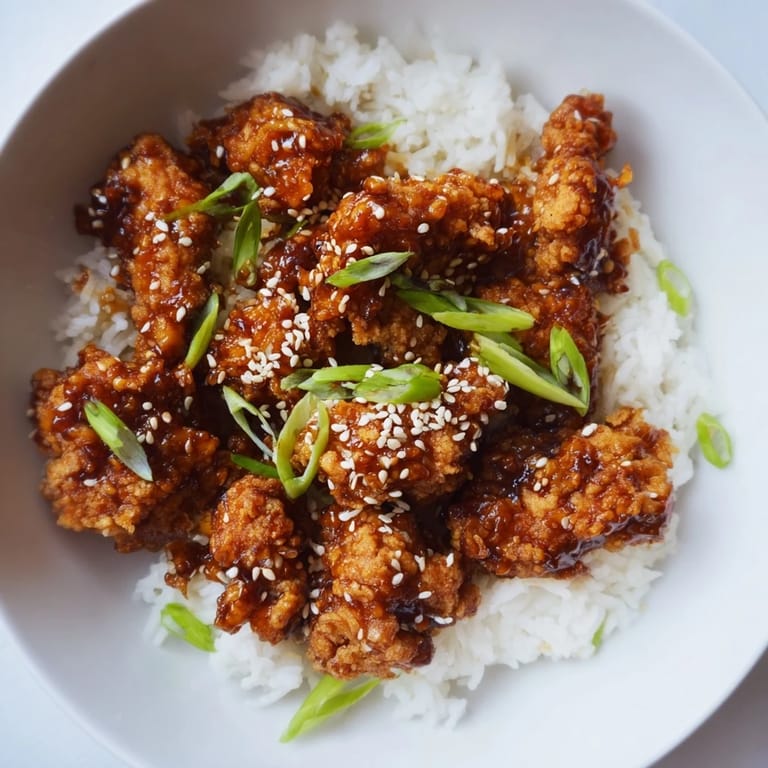
- Pour in your sauce mixture and stir constantly for 2–3 minutes. You'll see it transition from thin to glossy and thickened, clinging slightly to the spoon. This is the magic moment.
- Bring it together:
- Add the fried chicken to the sauce and toss gently until every piece is coated. Work quickly so the chicken doesn't lose its crispiness.
- Plate and serve:
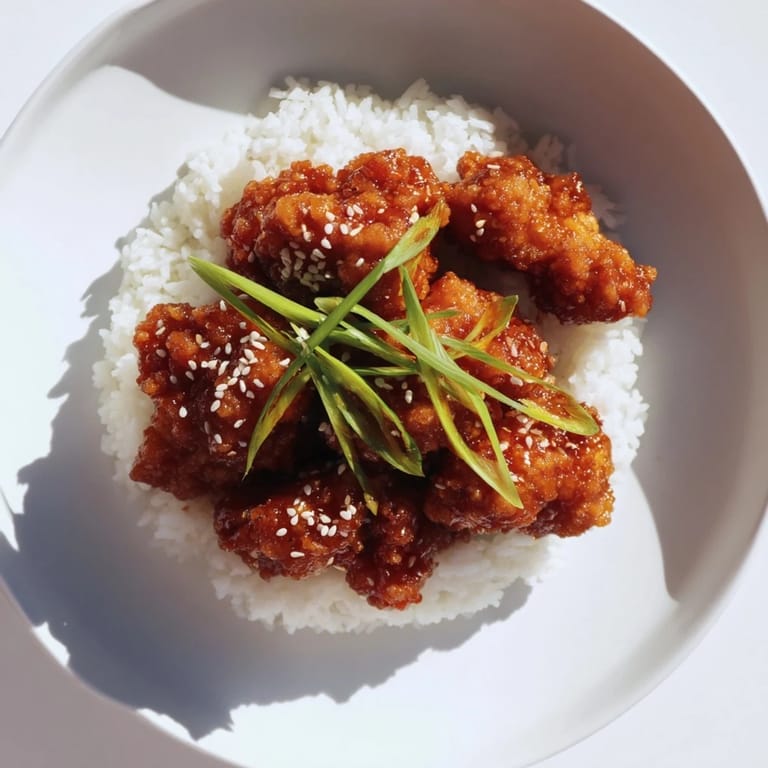
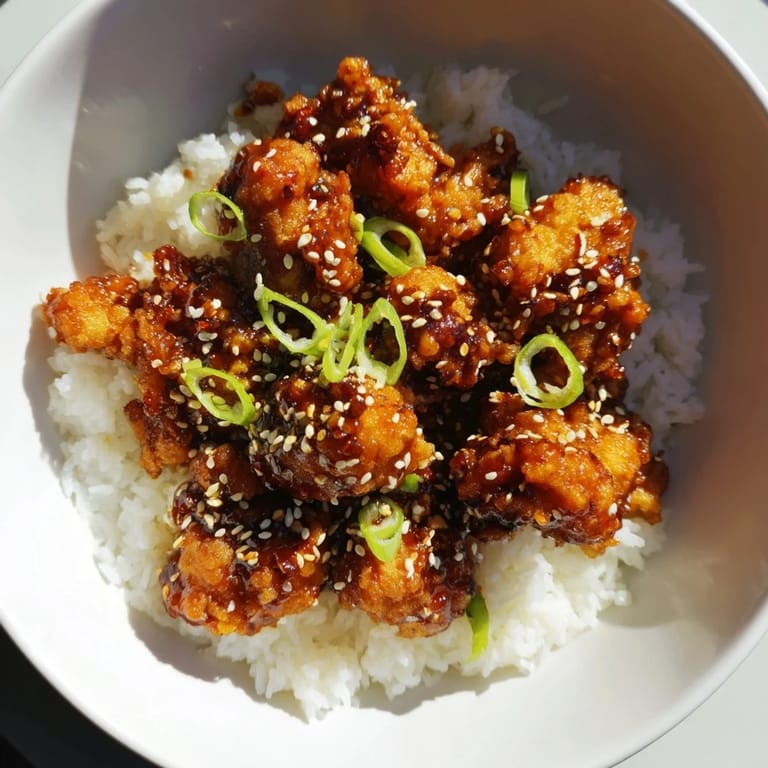
- Spoon over steamed rice, then top with sliced spring onions and toasted sesame seeds. Eat immediately while the chicken still has texture and the sauce is warm.
 Save
Save I learned the importance of that glossy sauce finish when a friend asked if I was trying to make a soup instead of the crispy-saucy thing she'd ordered at restaurants. Once I understood that the cornstarch slurry was the bridge between thin and perfect, everything clicked. That moment taught me to respect the technique, not just follow steps.
Why This Tastes Like a Restaurant
General Tso's chicken works because it hits every taste at once—sweet, savory, tangy, spicy, with texture that makes you slow down. The sauce isn't a condiment; it's the star, and it's built in layers. Most home cooks underseasoned their sauces because they're scared of salt or sugar, but this dish demands it. Once you understand that balance, you can adjust it to your taste without breaking the magic.
Crispy Chicken Technique
Deep-frying intimidates people, but it's one of the most forgiving techniques once you stop overthinking it. The cornstarch coating creates a barrier that insulates the chicken and turns golden instead of brown. You'll smell when it's right—that nutty, toasted aroma is your signal that you're not overcooking. If you're nervous, invest in a kitchen thermometer; it removes all the guesswork and builds your confidence fast.
Adjusting Spice and Flavor
The beauty of making this at home is that it's entirely yours to adjust. I started timid with chilies and gradually worked up; now I know exactly how many I like. The vinegar-to-sugar ratio can shift based on whether you want tang or sweetness to lead. Some nights I add an extra splash of Shaoxing wine because I'm in a richer mood. This recipe is your foundation, not your limitation.
- For milder heat, remove the chili seeds before adding them to the oil, or swap half the dried chilies for a pinch of paprika for color without fire.
- If it's too sweet, add a teaspoon of rice vinegar; if it's too sharp, a pinch more sugar balances it without obvious change.
- Spring onions added at the end stay fresh and bright; adding them earlier softens their punch if you prefer.
 Save
Save Make this dish once and it becomes part of your rotation, the thing you turn to when you want to impress yourself or someone else. It's proof that restaurant-level food lives in your kitchen if you're willing to pay attention to the details.
Recipe Questions
- → What cut of chicken is best for this dish?
Boneless, skinless chicken thighs are preferred for their juiciness and flavor, but breast can be substituted for a leaner option.
- → How can I adjust the spice level?
Modify the amount of dried red chilies or chili flakes used in the stir-fry to customize the heat intensity.
- → What cooking method can replace deep-frying?
Baking or air-frying the coated chicken pieces provides a lighter alternative while maintaining crispiness.
- → What sides pair well with this dish?
Steamed white rice is traditional, but jasmine rice or lightly steamed vegetables also complement the flavors well.
- → Can the sauce be prepared in advance?
Yes, the sauce can be mixed beforehand and stored chilled, then reheated and thickened just before coating the chicken.