 Save
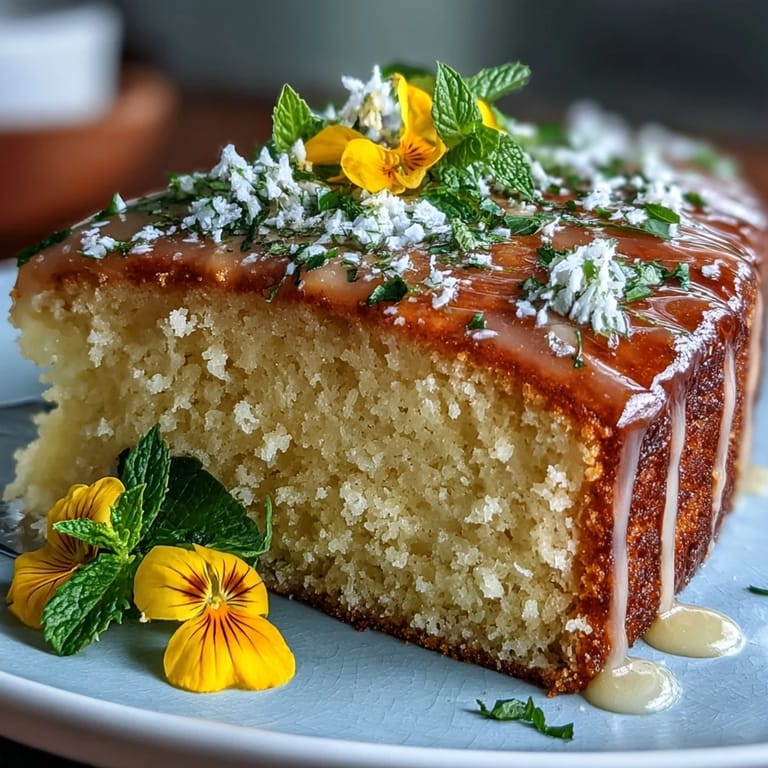
Save My mum always said the best desserts taste like an apology and a celebration rolled into one, and this lemon drizzle cake proves her right every single time. There's something about the way the sticky glaze pools into those little holes you poke while the cake is still warm—it's almost meditative, watching it disappear into the crumb like liquid sunshine. The first time I made this for Mother's Day, I was genuinely nervous, convinced I'd somehow mess up something so deceptively simple. But the kitchen filled with that incredible citrus aroma, and by the time those edible flowers went on top, I understood why she'd always make one for special occasions. It's tender, it's tangy, and it feels like you've done something genuinely thoughtful.
I'll never forget my colleague Sarah's face when I brought this into the office on a Tuesday—not even a special occasion, just because her week looked rough. She cut into it, took one bite, and actually closed her eyes for a second. Turns out she'd been craving something bright and cheerful, and somehow this cake knew exactly what she needed. That's when I realized this recipe isn't just about impressing people on Mother's Day; it's about those moments when you want to hand someone something warm that says, 'I'm thinking of you.'
Ingredients
- Unsalted butter (225g), softened: You need it soft so it creams properly with the sugar—pull it out of the fridge about 30 minutes before you start, and you'll thank yourself when it blends like a dream.
- Caster sugar (225g): This fine sugar dissolves better than granulated and gives the cake that lovely delicate texture, though honestly regular sugar works if that's what you have.
- Large eggs (4): Room temperature makes all the difference; cold eggs can seize up the batter and make everything grainy.
- Self-raising flour (225g): The leavening agent is already mixed in, so you don't have to fuss with baking powder, but sift it if you notice lumps.
- Lemon zest (2 unwaxed lemons): This is where the magic happens—use a microplane or grater and get right down to that bitter white pith; the oils in the zest are what makes every bite sing.
- Whole milk (2 tbsp): Just enough to loosen the batter slightly so it comes together smoothly without being dense.
- Salt (pinch): It's tiny but essential—enhances the lemon flavor and keeps everything balanced.
- Lemon juice (2 lemons' worth) and icing sugar (125g) for the drizzle: Fresh juice is non-negotiable here; bottled lemon juice tastes flat and chemical by comparison.
- Edible flowers for decoration: Violas, pansies, nasturtiums, or rose petals all look stunning, but confirm they're pesticide-free before you even bring them home.
Tired of Takeout? 🥡
Get 10 meals you can make faster than delivery arrives. Seriously.
One email. No spam. Unsubscribe anytime.
Instructions
- Get your oven and tin ready:
- Preheat to 180°C (160°C fan) or 350°F, then grease that 900g loaf tin thoroughly and line it with parchment paper so nothing sticks. This takes two minutes but saves you heartbreak later.
- Cream the butter and sugar:
- Beat them together in a large bowl until the mixture is pale, fluffy, and looks almost like pale mousse—this usually takes about 3 minutes with an electric mixer. You're incorporating air here, which makes the cake light and tender.
- Add the eggs one by one:
- Drop in one egg, beat until combined, then repeat with the next three; rushing this step can curdle the mixture and make your cake tough. If it looks slightly curdled, don't panic—add a spoonful of flour to bring it back together.
- Fold in the dry ingredients gently:
- Add the flour, lemon zest, milk, and salt all together, and fold with a spatula using as few strokes as possible—overmixing develops the gluten and makes the cake dense and rubbery. You're just looking for everything to come together, not to beat it into submission.
- Transfer to the tin and bake:
- Pour the batter into the prepared tin, smooth the top with a spatula, then slide it into the oven for 40 to 45 minutes. You'll know it's done when a skewer inserted into the center comes out clean or with just a crumb or two clinging to it.
- Make the drizzle while the cake bakes:
- Mix the fresh lemon juice and icing sugar in a small bowl, stirring until the sugar dissolves and you have a pourable consistency. If it's too thick, add a splash more juice; if too thin, add a bit more sugar.
- Poke and drizzle while warm:
- Once the cake is baked, leave it in the tin and use a skewer to poke holes all over the top—go deep but don't tear the cake. While it's still warm, slowly pour the drizzle over, letting it soak in through those holes like a little lemon bath.
- Cool completely and decorate:
- Let the cake sit in the tin until it's completely cool—this prevents it from falling apart when you turn it out. Once it's cooled, transfer it to a serving platter, dust lightly with extra icing sugar if you like, and add your edible flowers just before serving so they stay fresh and pretty.
 Save
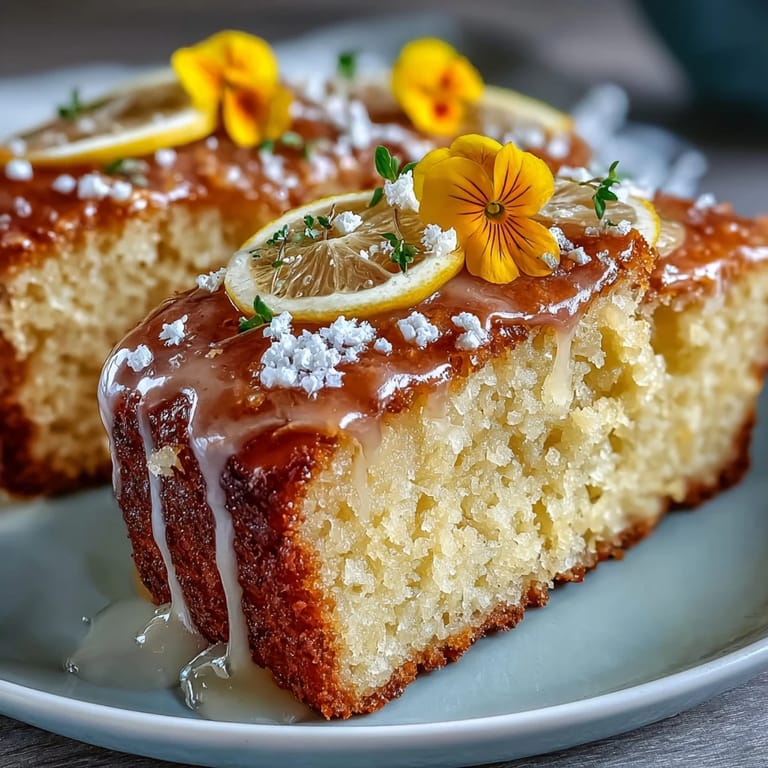
Save My neighbor tasted this cake and asked if I'd been secretly taking baking classes, which made me laugh because honestly, the whole thing is just organized common sense. But that moment reminded me why I keep making it—it's one of those rare recipes that tastes genuinely impressive but never makes you feel like you're in over your head.
Why Fresh Citrus Changes Everything
There's a real difference between fresh lemon juice and the bottled kind, and this cake is the perfect place to taste that difference. When you squeeze those lemons yourself, you get a brightness and complexity that bottled juice just can't match—it's got depth and character instead of that one-note sharpness. I learned this the hard way after making this cake with bottled juice once and wondering why it tasted slightly flat despite doing everything else right. Now I always have fresh lemons on hand, and I even zest them before I juice them so nothing goes to waste.
The Edible Flower Moment
Edible flowers feel fancy but they're genuinely just for decoration—they don't add flavor, but they transform the cake from 'nice homemade dessert' into 'restaurant-quality special occasion cake.' I used to stress about arranging them perfectly until I realized that a slightly scattered, natural-looking arrangement is actually more charming than anything precisely centered. The key is placing them just before serving so they stay vibrant and don't wilt into the glaze, and honestly, it's such a small thing that takes maybe 30 seconds.
Serving Suggestions and Storage
This cake is actually better the next day when the flavors have had time to meld and the glaze has completely set—so you can totally make it ahead if you're planning a special breakfast. It keeps well wrapped in an airtight container for up to three days, and it's wonderful served at room temperature with a dollop of crème fraîche or whipped cream alongside. The acidity of the lemon cuts through the richness beautifully, making it feel light despite being genuinely indulgent.
- Skip the edible flowers if you can't find them; a dusting of icing sugar alone is elegant and just as pretty.
- If you want to make it gluten-free, simply swap the self-raising flour for a gluten-free flour blend and add 1 teaspoon of baking powder to the mix.
- Serve this with a cup of strong tea or a glass of cold milk, and watch people's faces light up.
 Save
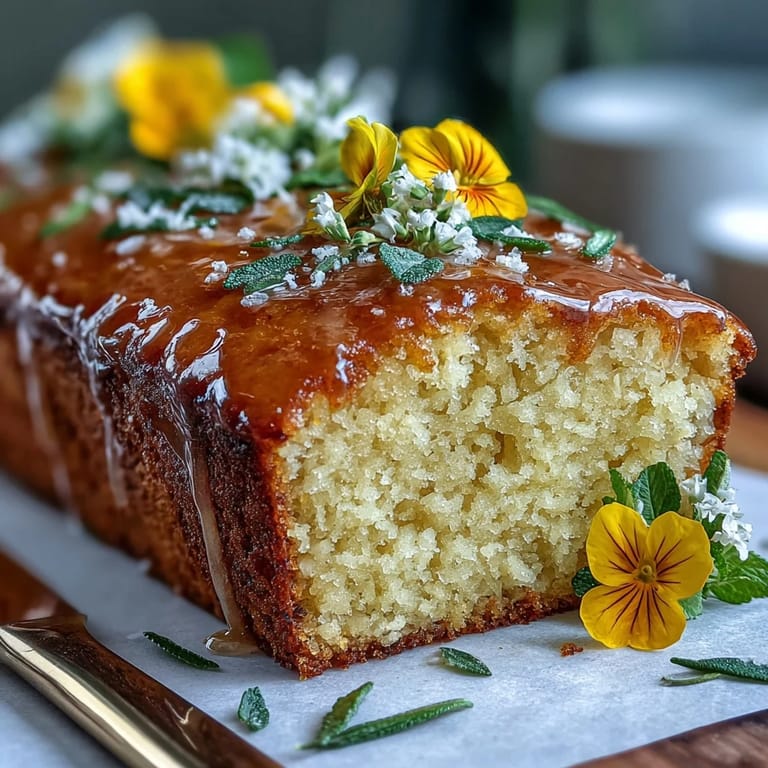
Save Baking this cake has become my go-to move for those moments when I want to show someone I care without having to say very much at all. It's proof that the simplest recipes, made with attention and fresh ingredients, can feel genuinely special.
Recipe Questions
- → What type of flour is recommended?
Self-raising flour is used to ensure a light and fluffy texture, but gluten-free alternatives can be substituted with added baking powder.
- → How do I ensure the cake stays moist?
Pouring the lemon drizzle over the warm cake allows it to soak in, keeping the cake moist and flavorful.
- → Can I use any edible flowers for decoration?
Yes, but ensure flowers are pesticide-free and safe for consumption, such as violas, pansies, nasturtiums, or rose petals.
- → What is the best way to store the cake?
Store the cake in an airtight container at room temperature for up to two days, or refrigerate for longer freshness.
- → Is this cake suitable for vegetarians?
Yes, the ingredients used are vegetarian-friendly and free from animal gelatin or other non-vegetarian components.